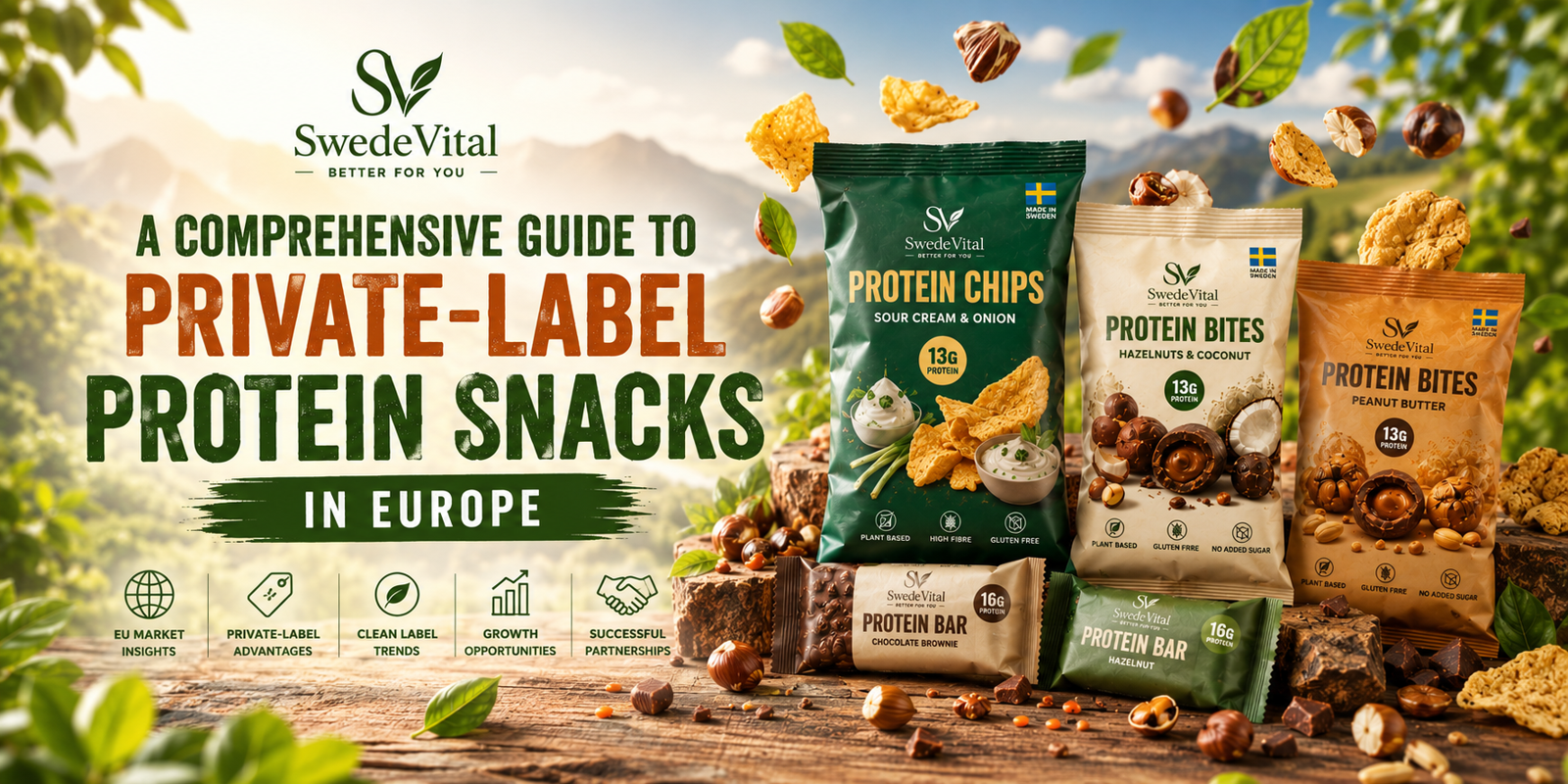
A Comprehensive Guide to Private-Label Protein Snacks in Europe
Kort sammanfattat
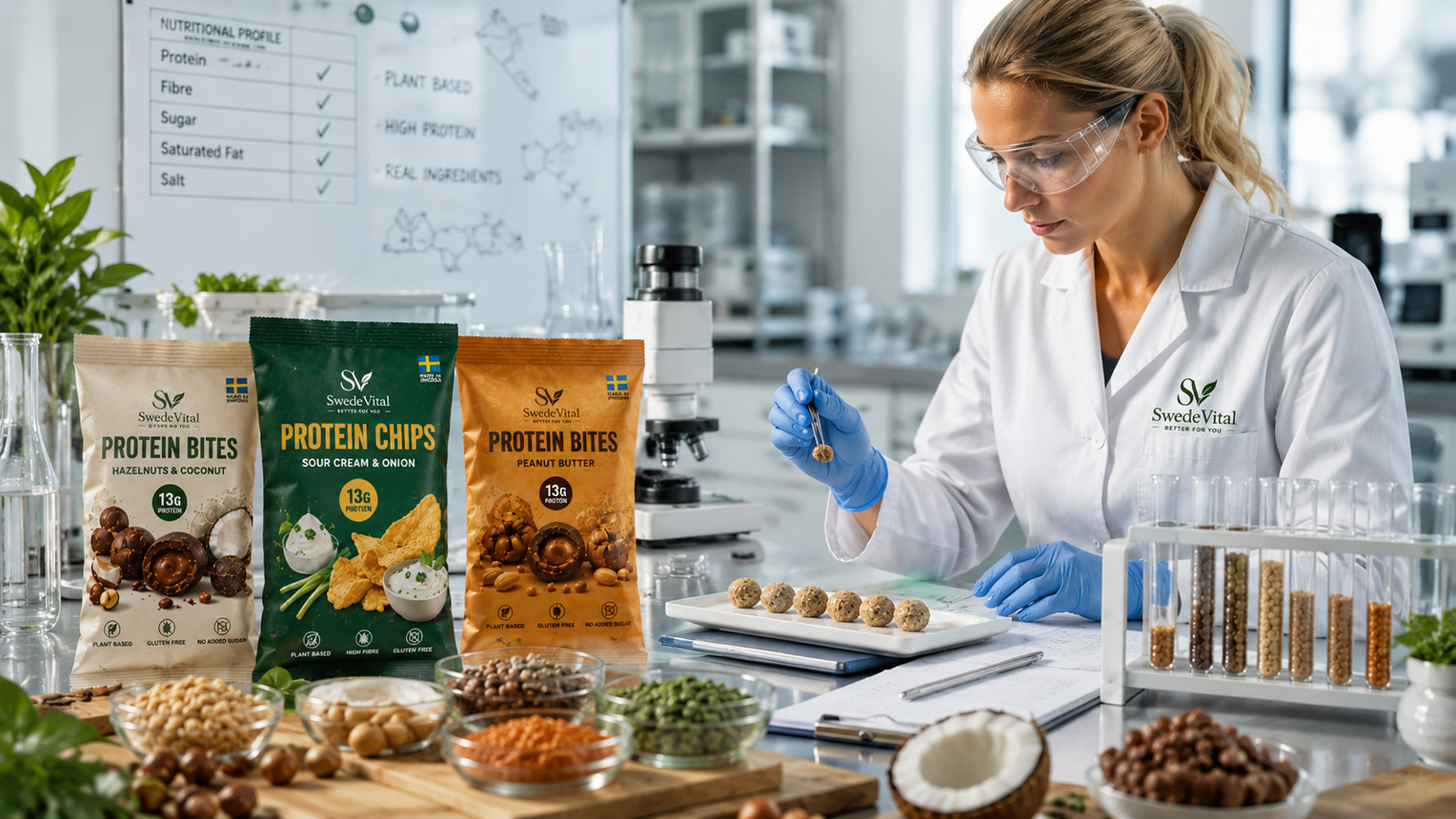
Private-label protein snacks in Europe allow brands to control quality, margins, and customization through EU-certified manufacturing. By leveraging local production networks, businesses can ensure regulatory compliance, reduce lead times, and differentiate their offerings in the growing wellness market.
TL;DR
- This guide outlines how to launch and scale private-label protein snacks in Europe using certified manufacturing and custom formulations.
Choosing the Right Private‑Label Protein Snack Partner in Europe: A Decision Blueprint
The European market for high‑protein, low‑carb snacks is expanding at a 6.29% CAGR, with value projected to reach USD 14.23 bn by 2034 (source: MarketDataForecast). For brands looking to capture this growth, the first hurdle is selecting a manufacturing partner that can deliver quality, compliance, and flexibility. Below is a step‑by‑step framework that distills the most critical criteria into actionable checkpoints.
1. Map Your Product Profile Against Regional Production Hubs
- Product type matters: Protein bars, protein bites, and lentil chips each require distinct processing lines (baked vs. cold‑press). Identify whether your concept aligns with a manufacturer’s core capabilities.
- Geographic advantage: The manufacturing landscape is concentrated in Germany, the Netherlands, Belgium, Italy, Poland, and the UK (Wonnda). Proximity to your primary markets reduces lead times and shipping costs.
- Compliance footprint: Look for IFS or ISO certifications, especially if you plan to sell in multiple EU member states. Italian manufacturers often hold IFS certification, a key marker of food safety compliance (source: Enterprise Europe Network).
2. Evaluate Production Flexibility and Minimum Order Quantities (MOQs)
Private‑label partners differ in their willingness to accommodate small batches, which is crucial for niche or seasonal products.
- Low MOQs: Some Lithuanian facilities, such as Newon Food, offer minimal order thresholds suitable for startups (Nutrada). Verify the exact figure before committing.
- Custom formulation: Ensure the partner can adjust protein sources (whey, pea, soy) and carbohydrate levels to meet your brand’s nutritional claims.
- Batch testing: Request a pilot run that includes sensory evaluation and shelf‑life studies. This step confirms that the final product meets both taste expectations and regulatory stability requirements.
3. Assess Supply Chain Transparency and Sustainability Credentials
Consumers increasingly demand traceability and eco‑friendly sourcing. A partner’s sustainability score can become a marketing differentiator.
- Ingredient provenance: Verify that protein sources are certified (e.g., non‑GMO, organic) if your brand positions itself as clean‑label.
- Carbon footprint: Ask for data on energy usage per kilogram of product. Facilities in the Netherlands and Belgium often report lower emissions due to advanced renewable energy integration.
- Packaging strategy: Evaluate whether the manufacturer can accommodate recyclable or biodegradable packaging, which is becoming a regulatory requirement in several EU countries.
4. Compare Cost Structures Beyond Unit Price
A unit price alone can be misleading if hidden costs erode margins.
- Logistics: Factor in freight charges, customs duties, and potential delays at borders.
- Quality control: Include the cost of third‑party testing or in‑house QC labs that may be required for certain claims (e.g., “gluten‑free”).
- Packaging fees: Some manufacturers charge separately for custom branding, embossing, or special packaging materials.
5. Pilot, Validate, and Scale
Once a partner passes the above filters, launch a limited pilot to validate market reception before full‑scale production.
- Market testing: Release the product in a single retail channel or through an e‑commerce platform to gauge consumer feedback.
- Iterate quickly: Use the pilot data to tweak formulation, packaging, or marketing messaging.
- Scale with confidence: When the pilot meets predefined KPIs (e.g., sales volume, margin, return rate), move to larger orders while maintaining close oversight of quality and supply chain metrics.
This framework aligns with current industry trends: private label continues to gain structural importance, with retailer brands accounting for around 39% of FMCG value in Europe (Good Food Products
Vanliga frågor
What are the benefits of private-label protein snacks in Europe?
Benefits include increased brand recognition, improved profit margins, enhanced customer loyalty, and full control over production quality and safety standards.
How does European production benefit private-label brands?
European production reduces lead times, ensures compliance with strict EU regulations, improves product quality, and offers flexible packaging solutions.
Can I create custom formulations for my private-label line?
Yes, experts can help develop unique formulations tailored to specific consumer needs, such as protein powders or functional supplements like Ashwagandha.