Wholesale Health & Wellness Products: A Stocking Guide for Retailers
Kort sammanfattat
Wholesale health products are bulk-bought retail-ready wellness items that help stores stock better margins and consistent supply. The best options include natural wellness products, functional snacks, vitamins, and private label wellness products that are compliant, shelf-ready, and easy for shoppers to understand quickly.
TL;DR
- Retailers should stock a mix of fast-moving, easy-to-understand wholesale health products like functional snacks and supplements, prioritizing clarity, compliance, and reliable supply chains over trendy gimmicks.
Most buyers do not struggle to find wellness products. They struggle to decide which ones earn their shelf space for the next twelve months — and which will sit there quietly losing money until somebody marks them down.
This guide is about that decision. It is written for retailers, health stores and online sellers buying wholesale health products in bulk for the first time, or reviewing a range that has stopped performing — whether you are buying from a health products wholesaler or direct from a manufacturer.
Wholesaler or distributor — which one are you actually buying from?
The two words get used interchangeably, and they are not the same thing. It matters because it changes what you can expect.
A wholesaler sells you goods in bulk at trade prices. The relationship is transactional and the margin is yours to make. You choose the products, you carry the stock, and you decide how they are merchandised.
A wellness products distributor usually holds exclusive or semi-exclusive rights to a brand in a territory. They often supply marketing assets, agree minimum prices and expect some commitment to the range. You get more support, and less freedom.
Neither is better. A shop testing a category wants a wholesaler, because the downside of a mistake is one order. A chain committing to a private-label line wants a distributor relationship, because consistency and supply security matter more than flexibility.
Ask directly which one a supplier is before you talk about price. It tells you more about how the relationship will work than the price list does.
Start with the shelf, not the catalogue
The common mistake is to open a supplier's range and pick what looks appealing. That is backwards. The range is thousands of products; your shelf is a fixed number of facings, and every facing you give to a new product is taken from something already earning.
Work the other way round:
- How many facings are genuinely available? Not "we could squeeze some in" — how many are free after removing nothing.
- What are those facings earning today? That is the number a new product has to beat, not zero.
- Who is the customer for this space? A pharmacy's wellness aisle, a gym's counter display and an online bundle are three different buyers with three different price ceilings.
Only then open the catalogue. You are now filling a defined gap rather than browsing.
What to ask a wholesale health products supplier before ordering
These questions separate suppliers of wholesale wellness products quickly, and most can be answered in one email.
Certification and compliance
Ask which standards the production site holds — ISO 22000 and BRCGS are the ones European retail buyers expect — and ask to see the certificates rather than a claim on a website. For anything sold in the EU, ask specifically about labelling compliance, because a product that is legal to manufacture is not automatically legal to sell in your market with the label it arrives in.
Minimum order quantity, and what it really means
A low MOQ headline often applies to one product in one flavour. Ask what the minimum is per SKU and whether you can mix flavours within a pallet. The difference between "500 units" and "500 units per flavour across four flavours" is the difference between a trial and a commitment.
Lead time, and what happens when it slips
Ask for the normal lead time and then ask what happened the last time it was missed. A supplier who answers the second question honestly is worth more than one who quotes a shorter number.
Shelf life on arrival
Not total shelf life — remaining shelf life when it reaches your door. Twelve months' total life with four months gone is a different product commercially. Get it in writing as a minimum guarantee.
What happens if it does not sell
Most wholesalers will not take stock back, and that is normal. But some will support a slow line with promotional pricing or a swap on the next order. Knowing which before you order changes how much you order.
Pilot properly, then decide on numbers
A pilot that proves nothing is worse than no pilot, because it costs money and produces an opinion. Three things make one useful.
Run it long enough to see a repeat purchase. Wellness products live or die on whether someone comes back. Two weeks measures curiosity; eight to twelve weeks measures a habit.
Change one thing at a time. A new product, in a new position, with a launch discount, tells you nothing about the product. Hold position and price steady, or you cannot attribute the result.
Decide the threshold before you start. Write down the units per week that would make it a keep, in advance. Deciding afterwards means deciding emotionally — and a buyer who chose the product is the worst-placed person to judge it fairly.
The numbers that actually decide it
With wholesale health products, margin percentage is the number everyone quotes and the least useful one on its own. A 60% margin on a product selling two units a week loses to a 35% margin on one selling twenty.
What to track instead:
- Cash margin per facing per week. This is the number that compares one product against another fairly, because it accounts for both profitability and speed.
- Repeat rate. If you can see it — loyalty data, online reorders — it predicts next quarter better than this quarter's units do.
- Waste and markdown. A product with short remaining shelf life can show good margin and still lose money once write-offs are counted.
Review at a fixed date rather than when something feels wrong. Ranges drift because nobody scheduled the conversation.
A short checklist
- Count the facings genuinely available for wholesale health products, and what they earn today.
- Confirm whether the supplier is a wholesaler or a distributor, and which you want.
- Get certification documents, not certification claims.
- Establish MOQ per SKU, remaining shelf life on arrival, and lead time.
- Write down the weekly units that mean "keep" before ordering.
- Run eight to twelve weeks, holding price and position steady.
- Judge on cash margin per facing per week, not margin percentage.
Where SwedeVital fits
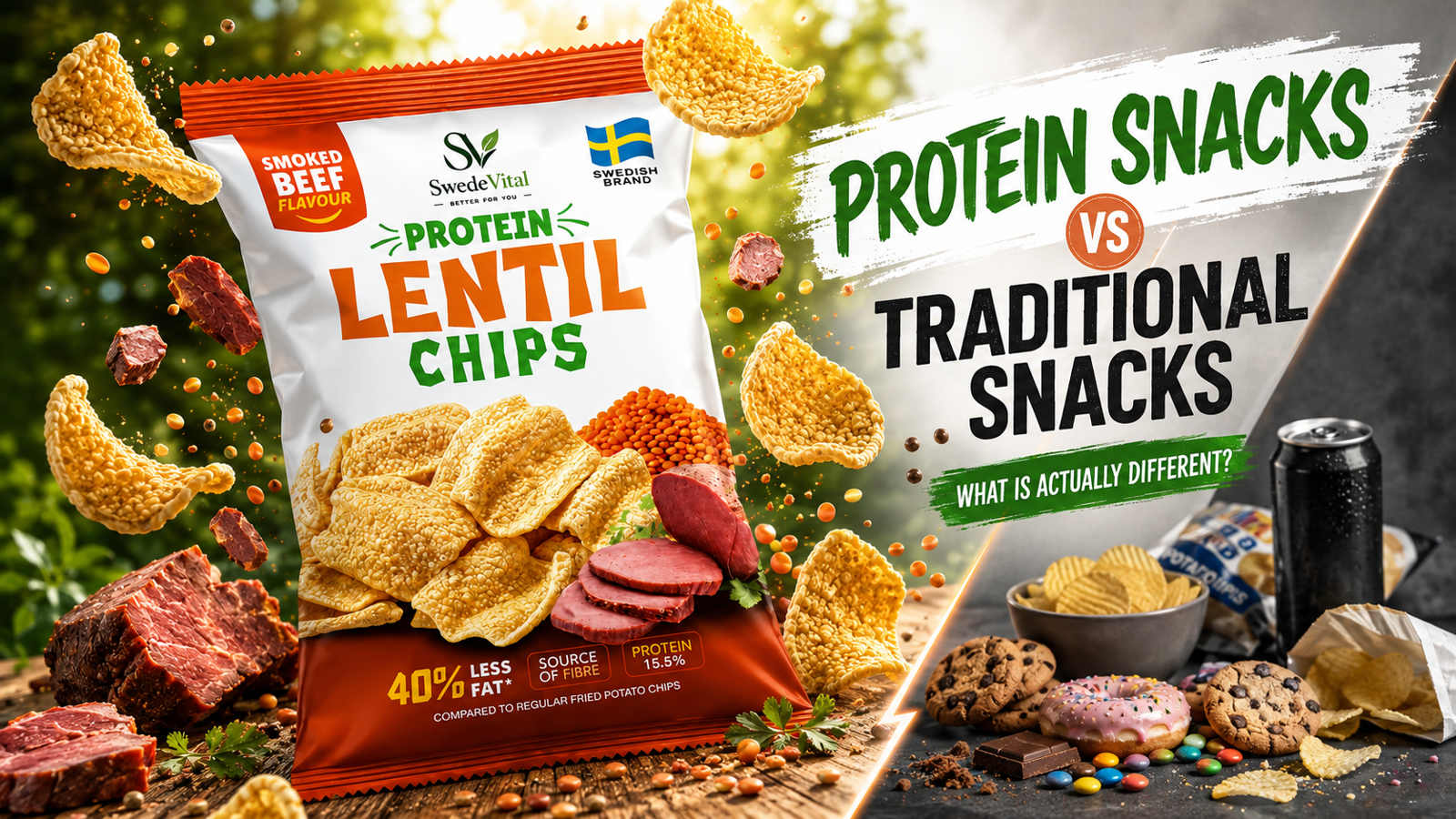
SwedeVital is a European wholesaler of health and wellness products — protein snacks, bites and bars — supplying retailers, health stores and online sellers in bulk. Production is ISO 22000 and BRCGS certified, products ship shelf-ready and EU-compliant, and minimum orders are set to make a real pilot affordable rather than a commitment you have to justify afterwards.
If you are working through the questions above, our wholesale and retail supply page sets out the ranges, certifications and order terms in one place, and the contact form reaches a person rather than a queue.
Vanliga frågor
What are the best wholesale health products for retail?
The most effective wholesale health products include natural wellness products, functional snacks, vitamins, minerals, and private label wellness items that offer clear benefits and high reorder rates.
How do I choose a reliable supplier for wholesale health products?
Evaluate suppliers based on five key criteria: product clarity, shelf appeal, margin potential, regulatory compliance, and supply reliability to ensure consistent stock and profitability.
What is the difference between branded wholesale and private label wellness products?
Branded wholesale resale offers speed to shelf with known formats but lower exclusivity, while private label wellness products provide stronger margin potential and brand control for retailers and distributors.