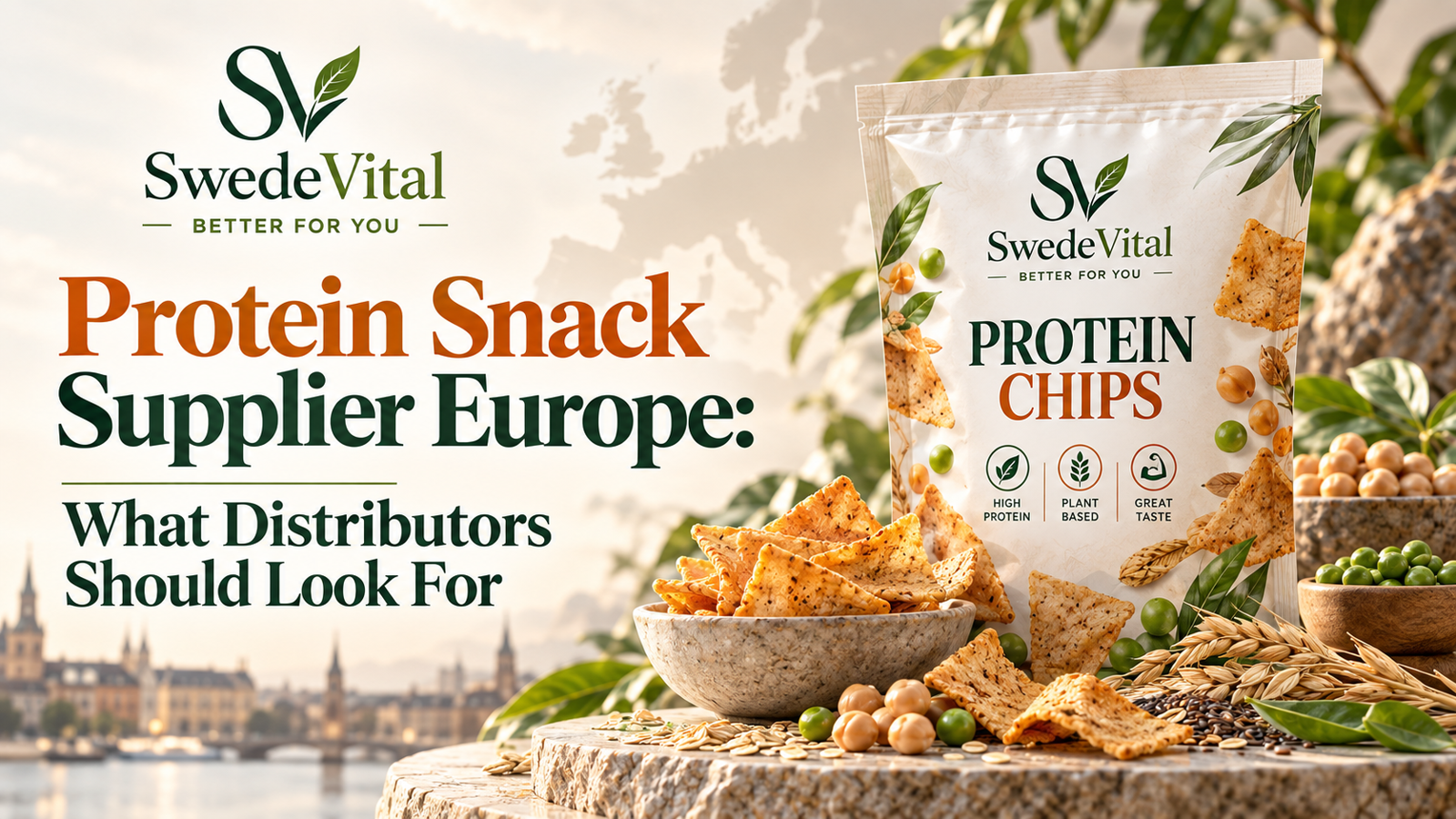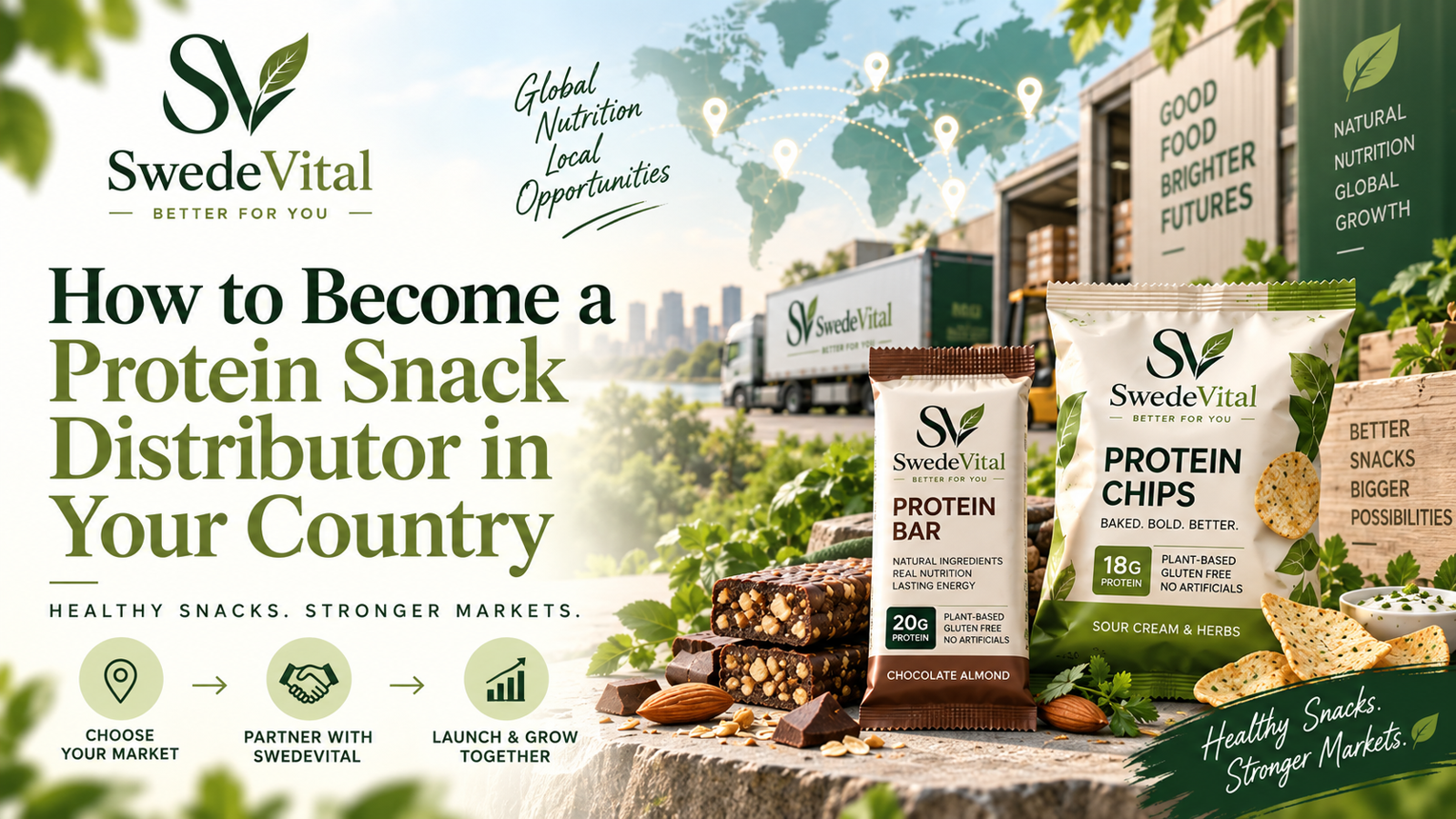
Protein Chips Wholesale Europe: A Buyer's Guide for Distributors
Kort sammanfattat
Protein chips wholesale Europe means sourcing high-protein savoury snacks in bulk or private label for resale. Buyers should weigh formulation, taste, certifications, MOQs, margin after promotion, shelf life and EU-compliant labelling, and confirm supplier capacity to hold quality and supply as volume scales.
TL;DR
- Choosing a protein chips wholesale partner in Europe comes down to credible formulation, defensible EU-compliant claims, reliable supply and a margin that survives promotion, not just the highest protein number on the pack.
Protein chips wholesale Europe refers to sourcing high-protein, better-for-you savoury snacks in bulk or under private label for resale across European retail and distribution channels. For a buyer, the decision rarely comes down to taste alone. It hinges on formulation, margin structure, regulatory compliance, shelf life and whether a supplier can hold quality and keep supplying as you scale. This guide walks category managers, distributors and private-label partners through the trade-offs that actually decide whether a listing earns permanent space.
The best protein chip for your shelf is the one that pairs a credible nutrition story with reliable supply, clean EU-compliant labelling and a margin that survives promotion — not simply the highest number on the front of the pack.
Why Protein Chips Are Winning Shelf Space
Savoury snacking is a habit; protein is a purchase driver. Protein chips sit at the intersection of the two, letting a shopper satisfy a crisp-and-crunch craving while feeling they are making a more considered choice. For a category manager that combination is useful because it can pull shoppers from two fixtures at once: the traditional crisps aisle and the sports-nutrition or health-food set.
Research suggests consumer interest in higher-protein and plant-based options has grown across European markets, and buyers frequently describe “permissible indulgence” products — snacks that feel like a treat but carry a functional angle — as sticky once they gain distribution. That said, interest is not the same as sell-through. A protein chip only holds its listing if it performs on repeat purchase, and repeat purchase depends on flavour delivery and texture, not on the claim. Treat the protein story as the reason a shopper tries the product once, and taste as the reason they come back.
How to Choose a Protein Chips Wholesale Europe Supplier
Choosing a supplier is a due-diligence exercise, not a tasting session. The strongest partners are transparent about what goes into the product, how it is made and how consistently they can deliver. Work through these dimensions before you commit to a line.
Protein Source and Formulation
Ask what the protein is actually derived from — legumes such as lentils or peas, dairy, soy, or a blend — because the source shapes taste, texture, allergen status and the shopper you can sell to. Plant-based, legume-forward recipes tend to appeal to a broad better-for-you audience and sidestep dairy allergens, while the ingredient list should stay short and recognisable. A clean deck (few additives, no ingredients a shopper would struggle to pronounce) is increasingly a baseline expectation rather than a premium feature.
Taste, Texture and Format
Higher protein can come at the cost of a dense or chalky bite, so texture is where many products fail in market. Always sample across the flavour range, and ideally run an informal panel with people outside the buying team. Consider format too: single-serve bags drive impulse and trial, while sharing or multipack formats support pantry-loading and better basket economics. A supplier with a coherent range — not just one hero SKU — gives you room to build a planogram.
Certifications and Compliance
Confirm the manufacturing site holds a recognised food-safety certification (for example a GFSI-benchmarked scheme such as BRCGS or FSSC 22000) and ask for the certificate and audit status in writing. Depending on your channel you may also need vegan, organic, gluten-free, kosher or halal documentation. Do not accept a claim on a pack without the paperwork behind it; in Europe the retailer and distributor share responsibility for label accuracy.
Private Label vs. Branded Distribution
One of the first strategic forks in protein chips wholesale Europe is whether to distribute an existing brand or commission a private label. Each model suits a different business.
Branded distribution is faster to launch and leans on the manufacturer's marketing, recognition and NPD pipeline. You carry less risk on artwork and formulation, but you also compete on availability rather than exclusivity, and your margin is capped by the brand's pricing architecture. This route suits distributors who want proven movers and retailers filling a clear gap quickly.
Private label gives you a differentiated product, control of pricing and typically a stronger margin, at the cost of higher minimums, longer lead times and responsibility for branding and demand generation. It rewards buyers with the volume and shelf control to move committed quantities. Many partners start with branded lines to validate demand, then convert their best sellers to private label once the numbers justify the investment. A manufacturer that credibly offers both — as SwedeVital does across its protein snack range — lets you move between models without switching suppliers.
Pricing, MOQs and Margin: Ask, Don't Assume
Pricing and minimum order quantities vary widely by supplier, format, ingredients and whether you buy branded or private label, so treat any figure you see quoted online as indicative only and confirm directly. What matters more than the headline unit cost is the total landed economics of the deal.
- Landed cost, not list price. Factor in freight, duties where relevant, payment terms, and the cost of holding stock at the shelf life you are offered.
- Margin that survives promotion. Model your everyday margin and your promotional margin. A snack that only works at full price will disappoint the moment you run a feature.
- MOQ against velocity. A low minimum protects cash flow while you test; a higher minimum usually unlocks better pricing but only pays off if your rate of sale clears the stock inside its shelf life.
- Price breaks and scaling. Ask for the full price ladder up front so you can plan the reorder that improves your margin rather than discovering it later.
The professional move is to request a formal quotation with MOQs, price breaks, lead times and payment terms in writing, then build a simple margin model before you commit. Never assume; always confirm.
Logistics, Shelf Life and EU Compliance
Protein chips are ambient, lightweight and relatively robust, which makes them friendlier to distribute than chilled or fragile lines — but the details still decide profitability. Clarify the shelf life on delivery, not just at production, and agree a minimum residual shelf life on every consignment so you are not left clearing short-dated stock.
On compliance, a product sold across European markets must carry accurate nutrition and ingredient information, allergen declarations, and any mandatory statements for the destination country, often in the local language. Nutrition and health claims are tightly regulated in the EU, so make sure any front-of-pack messaging is defensible and that the manufacturer can back it. Confirm case configuration, pallet patterns and barcodes (EAN/GTIN) match your warehouse and retail systems before the first order ships, and align on Incoterms so responsibility for freight, insurance and customs is unambiguous.
Fitting Protein Chips Into a Wider Protein Strategy
Buyers rarely evaluate a snack in isolation. Protein is now a cross-category shopper mission that spans everything from protein powder and ready-to-drink shakes to bars, bites and savoury snacks. Where protein powder and shakes serve a deliberate, planned occasion — post-workout or meal replacement — protein chips capture the unplanned, everyday snacking moment, which is often a larger and more frequent purchase occasion.
Positioning protein chips as the impulse and grab-and-go anchor of a broader protein set lets you convert dedicated protein shoppers into more frequent buyers while introducing mainstream snackers to the category. A coherent range — chips alongside protein bites, natural bites and bars, plus functional lines such as mushroom and creatine products — also strengthens your negotiating position and simplifies your supply base by consolidating around fewer, more capable partners.
A Buyer's Checklist for Protein Chips Wholesale Europe
Before you sign, work through a structured checklist so nothing important is left to assumption:
- Product: protein source, full ingredient deck, allergen profile, flavour range and format options.
- Proof: valid food-safety certification, plus any vegan, organic, gluten-free, kosher or halal documentation you need — supplied in writing.
- Taste: samples across the range, ideally blind-tasted beyond the buying team.
- Commercials: MOQ, full price ladder, lead times and payment terms in a formal quotation.
- Margin: everyday and promotional margin modelled on landed cost.
- Logistics: residual shelf life on delivery, case and pallet configuration, barcodes, and agreed Incoterms.
- Compliance: EU-compliant labelling and defensible claims for every destination market.
- Scale: the supplier's capacity to hold quality and supply as volume grows, and their willingness to support private label.
If a prospective partner answers these openly and in writing, you are dealing with a serious supplier. If they are evasive on paperwork or capacity, treat that as a signal.
Frequently Asked Questions
What is the minimum order quantity for protein chips wholesale?
Minimum order quantities vary by supplier, format and whether you buy branded stock or commission private label. Branded lines usually carry lower minimums, while private label typically requires more committed volume. Always request the MOQ and the accompanying price breaks in writing so you can weigh them against your expected rate of sale.
How are protein chips different from protein powder?
Protein powder is a concentrated ingredient bought for a planned occasion such as a post-workout shake, whereas protein chips are a finished, ready-to-eat savoury snack aimed at everyday snacking and impulse purchase. For a buyer they sit in different fixtures and answer different shopper missions, but both feed the same broader demand for higher-protein products.
What certifications should I look for when buying protein chips in Europe?
At minimum, look for a recognised food-safety certification such as a GFSI-benchmarked scheme (for example BRCGS or FSSC 22000) at the manufacturing site. Depending on your channel and shoppers, you may also want vegan, organic, gluten-free, kosher or halal documentation. Ask for every certificate and its current status in writing.
Can I get private-label protein chips in Europe?
Yes. Many European manufacturers offer private-label or contract manufacturing alongside their own brands, letting distributors and retailers launch a differentiated product under their own name. Expect higher minimums and longer lead times than branded stock, in exchange for pricing control and typically stronger margins.
Are protein chips a healthy snack?
Protein chips are generally positioned as a better-for-you alternative to conventional crisps, and research suggests higher-protein snacks may support satiety for some people. They are still a snack, however, so nutritional value depends on the specific recipe. Compare the full nutrition panel and ingredient list rather than relying on front-of-pack claims.
What shelf life do protein chips typically have?
Ambient protein chips generally offer a practical shelf life, but the exact figure depends on the recipe, packaging and storage conditions, so confirm it with your supplier. More importantly, agree a minimum residual shelf life on delivery for every consignment so you are never left clearing short-dated stock.
Vanliga frågor
What is the minimum order quantity for protein chips wholesale?
Minimum order quantities vary by supplier, format and whether you buy branded stock or commission private label. Branded lines usually carry lower minimums, while private label typically requires more committed volume. Always request the MOQ and its price breaks in writing so you can weigh them against your expected rate of sale.
How are protein chips different from protein powder?
Protein powder is a concentrated ingredient bought for a planned occasion such as a post-workout shake, whereas protein chips are a finished, ready-to-eat savoury snack aimed at everyday snacking and impulse purchase. They sit in different fixtures and answer different shopper missions, but both feed the same broader demand for higher-protein products.
What certifications should I look for when buying protein chips in Europe?
At minimum, look for a recognised food-safety certification such as a GFSI-benchmarked scheme (for example BRCGS or FSSC 22000) at the manufacturing site. Depending on your channel you may also want vegan, organic, gluten-free, kosher or halal documentation. Ask for every certificate and its current status in writing.
Can I get private-label protein chips in Europe?
Yes. Many European manufacturers offer private-label or contract manufacturing alongside their own brands, letting distributors and retailers launch a differentiated product under their own name. Expect higher minimums and longer lead times than branded stock, in exchange for pricing control and typically stronger margins.
Are protein chips a healthy snack?
Protein chips are generally positioned as a better-for-you alternative to conventional crisps, and research suggests higher-protein snacks may support satiety for some people. They are still a snack, so nutritional value depends on the specific recipe. Compare the full nutrition panel and ingredient list rather than relying on front-of-pack claims.
What shelf life do protein chips typically have?
Ambient protein chips generally offer a practical shelf life, but the exact figure depends on the recipe, packaging and storage conditions, so confirm it with your supplier. More importantly, agree a minimum residual shelf life on delivery for every consignment so you are never left clearing short-dated stock.