Private Label Suppliers Europe: How Distributors Can Choose the Right Manufacturing Partner
Kort sammanfattat
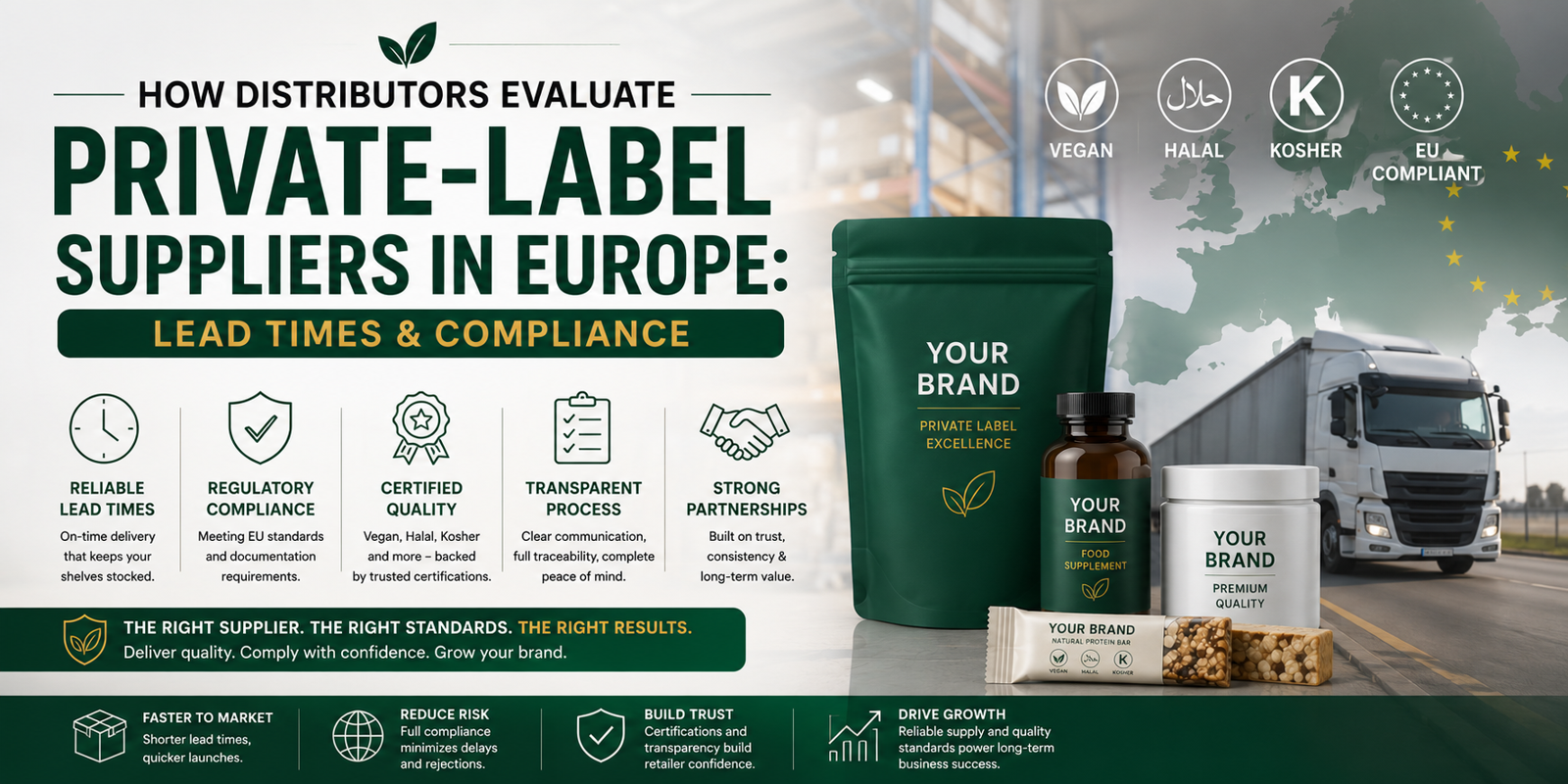
European distributors prioritize private label suppliers based on proximity-driven lead times, strict adherence to EFSA and GMP regulations, and robust production reliability. Key evaluation metrics include rapid turnaround capabilities, transparent ingredient sourcing for safety compliance, and flexible manufacturing infrastructure that ensures consistent quality and inventory stability in a comp
TL;DR
- Distributors select private label suppliers in Europe by prioritizing short lead times via local proximity, strict EFSA/GMP regulatory compliance, and proven production reliability to ensure supply chain resilience.
Choosing the Right Private Label Supplier in Europe: A Practical Decision Framework
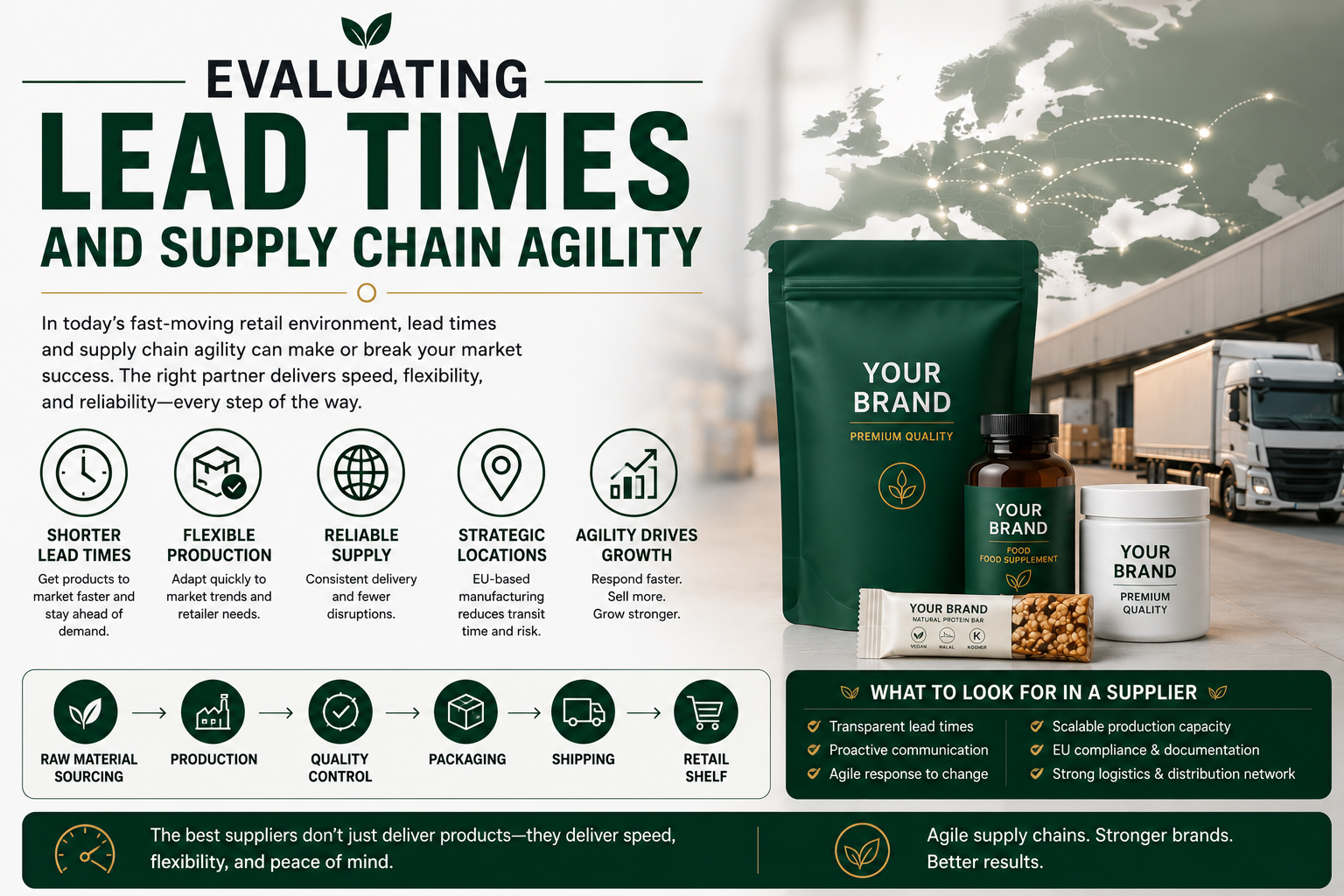
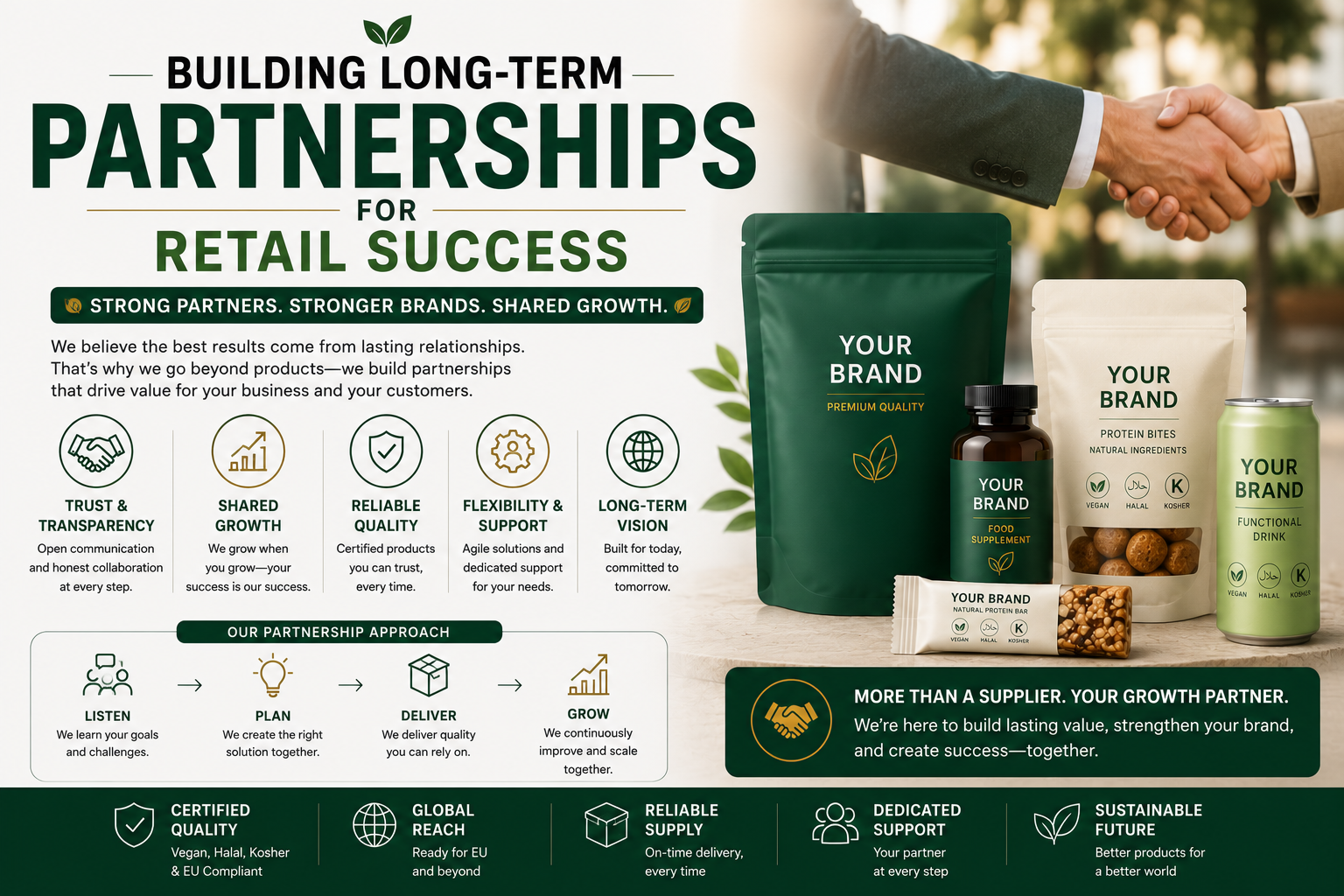
When a distributor wants to launch a new snack line, the first hurdle is finding a European manufacturer that can deliver quality, compliance, and scalability without breaking the budget. The market is crowded with firms ranging from boutique artisanal producers to large contract manufacturers. Rather than chasing the most popular name, distributors should apply a structured decision process that aligns production capabilities with business goals.
1. Define Your Core Success Criteria
Start by scoring each criterion on a 1–5 scale (1 = low importance, 5 = critical). The criteria below are the most common for snack and functional food distributors:
- Regulatory compliance – EU food safety standards, HACCP, allergen control.
- Production capacity & scalability – ability to ramp from 10 k kg to >1 M kg per year.
- Quality consistency – batch-to-batch reproducibility, third‑party audit history.
- Lead time & logistics – from order to shipment, including customs clearance.
- Cost structure – unit price, minimum order quantity (MOQ), and flexibility in packaging options.
- Innovation & product development support – recipe formulation, ingredient sourcing, trend scouting.
Assign a weight to each criterion based on your strategic priorities. For example, if you’re targeting health‑conscious consumers, regulatory compliance and quality consistency might carry 30 % of the total score.
2. Map Manufacturers Against Your Criteria
Gather data from publicly available sources (industry directories, company websites, audit reports) and fill a matrix. Below is an illustrative example using three generic European manufacturers:
| Manufacturer | Compliance | Capacity | Quality | Lead Time | Cost | Innovation |
|---|---|---|---|---|---|---|
| Noesis Ltd. | 5 | 4 | 5 | 3 | 4 | 5 |
| DMC Food (Ireland) | 4 | 5 | 4 | 4 | 3 | 3 |
| DIET‑FOOD (Mipama) | 5 | 3 | 5 | 2 | 5 | 4 |
Multiply each score by its weight and sum to get a composite score. The manufacturer with the highest total is your best fit under the defined priorities.
3. Validate Through Pilot Production
A pilot run is the only way to confirm that theoretical scores translate into real performance. During the pilot:
- Sample Quality Check – Verify texture, taste, and allergen labeling against your specifications.
- Process Observation – Tour the facility or review video footage of critical steps (e.g., extrusion, coating).
- Compliance Audit – Request copies of recent ISO 22000 or BRC certificates.
- Logistics Test – Measure actual lead time from order to delivery and assess packaging integrity during transit.
If the pilot meets all thresholds, proceed to a full‑scale contract. If not, revisit your criteria weights or consider an alternative partner.
4. Negotiate Terms That Protect Your Brand
- Minimum Order Quantity (MOQ) – Align MOQ with forecasted demand; negotiate tiered pricing for larger volumes.
- Intellectual Property (IP) Clauses – Ensure recipe confidentiality and exclusive rights to the final product.
- Quality Assurance (QA) Escrow – Agree on a third‑party QA service that holds funds until quality benchmarks are met.
- Exit Strategy – Include clauses for early termination if performance standards fall below agreed levels.
5. Leverage Ongoing Collaboration for Continuous Improvement
A strong partnership evolves beyond the initial contract. Schedule quarterly reviews to:
- Assess market feedback and tweak formulations.
- Explore new ingredient trends (e.g., plant‑based proteins, functional fibers).
- Plan capacity expansions or seasonal production spikes.
This proactive approach keeps your product line competitive and responsive to consumer demands.
Case in Point: SwedeVital Protein Bites
SwedeVital’s protein‑rich snack range—such as the Dates & Hazelnuts Coated with Coconut—illustrates
Vanliga frågor
Why are lead times critical for private label suppliers in Europe?
Short lead times allow distributors to respond rapidly to shifting consumer preferences, reduce warehousing costs, and minimize the risk of stockouts or product obsolescence compared to overseas alternatives.
What regulatory standards must private label suppliers meet in Europe?
Suppliers must adhere to strict European Food Safety Authority (EFSA) guidelines, including Good Manufacturing Practices (GMP), ISO 22000, and HACCP certifications for proper labeling, ingredient sourcing, and health claim accuracy.
How does production reliability impact distributor partnerships?
Reliability ensures consistent product quality, potency, and purity across batches. It also indicates a supplier's financial stability and ability to scale production, which is essential for maintaining shelf presence and managing inventory risks.