Launch Your Own Premium Lion’s Mane Brand in Europe: A Private Label Playbook
Kort sammanfattat
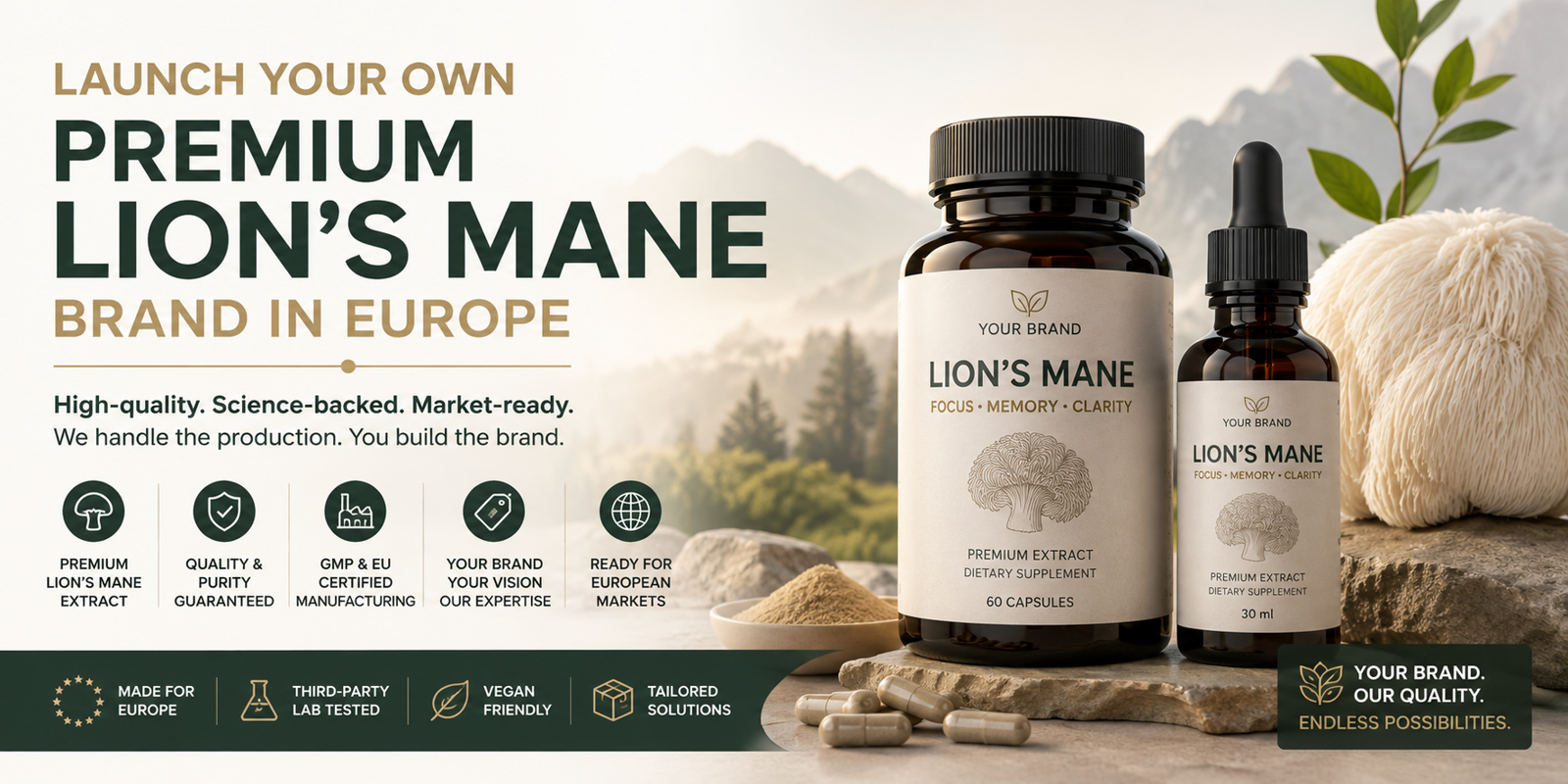
By partnering with GMP‑certified European manufacturers, securing novel food approval, offering diverse dosage forms (capsules, tinctures, gummies), and leveraging eco‑friendly packaging plus multi‑channel distribution, you can launch a premium private label lion’s mane brand that meets EU safety standards and resonates with health‑conscious consumers.
TL;DR
- Partner with GMP‑certified European manufacturers, secure novel food approval, offer diverse dosage forms, and use eco‑friendly packaging to launch a compliant, market‑ready private label lion’s mane brand in Europe.
Launching Your Own Premium Lion’s Mane Brand in Europe: A Decision‑First Playbook
The European market is shifting toward functional mushrooms, yet the path from raw material to shelf‑ready product is riddled with regulatory, quality, and supply‑chain pitfalls. If you’re ready to launch a premium Lion’s Mane line, start by answering three hard questions: What niche can you dominate?, Which supplier guarantees traceability and consistency?, and How will you differentiate packaging and marketing while staying compliant? The following framework turns those questions into actionable steps.
1. Define Your Value Proposition Early
Before contacting manufacturers, map the consumer segment that will pay a premium for Lion’s Mane. Current data shows a 9.39 % CAGR for Lion’s Mane in Europe through 2031 (source). The fastest‑growing sub‑segment is cognitive support, but regulatory language around “brain health” remains cautious. Positioning your brand as a “clean‑label brain fuel” or a “stress‑relief supplement” can sidestep contested claims while still appealing to wellness consumers.
Decision point: Choose one primary benefit (cognitive, stress relief, immune support) and lock it into your product name, tagline, and ingredient list. This focus will guide supplier selection and marketing tone.
2. Vet Suppliers on Three Pillars
- Regulatory compliance & traceability: Look for EU EKO certification or FSSC 22000‑certified facilities. For example, Mushroom Empire grows Lion’s Mane in Poland with proprietary glycerosome technology and claims a fully documented supply chain.
- Quality consistency: Independent ISO‑accredited lab testing is essential. Studies show that over half of EU/UK Lion’s Mane supplements fail to meet label claims (source). Request recent third‑party test reports before signing.
- Production flexibility: Minimum order quantities (MOQs) and lead times vary widely. A manufacturer that can produce 250 jars of single‑extract Lion’s Mane (Evivita) offers a lower entry barrier for startups.
Compile a matrix scoring each supplier on these criteria. The highest‑scoring partner will become your production backbone.
3. Choose the Right Formulation Format
- Powder: Ideal for capsules or sachets; requires precise moisture control to avoid clumping.
- Capsules: Consumer‑friendly, but higher unit cost and stricter excipient regulations.
- Gummies: Popular in the UK and Germany; must navigate sugar content limits and color additives.
Consider your target market’s purchasing habits. For a premium brand, capsules or powder sachets often convey higher perceived value than gummies.
4. Design Packaging That Communicates Quality
European consumers scrutinize labels for authenticity. Use clear, concise claims supported by certificates (e.g., “EU EKO certified,” “Glycerosome‑enhanced extraction”). Keep the design minimalistic; a single high‑resolution image of the mushroom can create instant recognition.
Tip: Incorporate a QR code linking to your full lab report. Transparency builds trust and reduces regulatory scrutiny.
5. Navigate EU Regulatory Pathways
- Novel Food Regulation (EU) 2015/2283: Lion’s Mane is considered a novel food if not traditionally consumed in the EU. Obtain approval or rely on the “deemed novelty” pathway for extracts.
- Food Information Regulations (FIR): Claims must be substantiated; avoid unverified cognitive benefits unless supported by clinical data.
Engage a regulatory consultant early to map out the approval timeline. A typical novel food application can
Vanliga frågor
What is the main benefit of using a private label approach for lion’s mane supplements?
It allows brands to launch premium products without R&D overhead, leveraging established manufacturing expertise and compliance with EU safety standards.
Which dosage forms are most popular in Europe for lion’s mane?
Capsules appeal to health‑tech enthusiasts, tinctures offer quick absorption, and gummies attract families and younger consumers with a tasty option.
How do I ensure my product meets EU novel food regulations?
Partner with manufacturers who already hold GMP certification and have experience navigating EFSA approval dossiers for novel foods like lion’s mane.
What packaging options support sustainability claims?
Use recyclable glass bottles, biodegradable capsules, or PET with bamboo caps to resonate with eco‑conscious consumers.
Which distribution channels should I target first?
Start with Amazon EU and local health food chains, then expand to direct-to-consumer sites and brick‑and‑mortar retailers using a ready‑to‑sell kit.