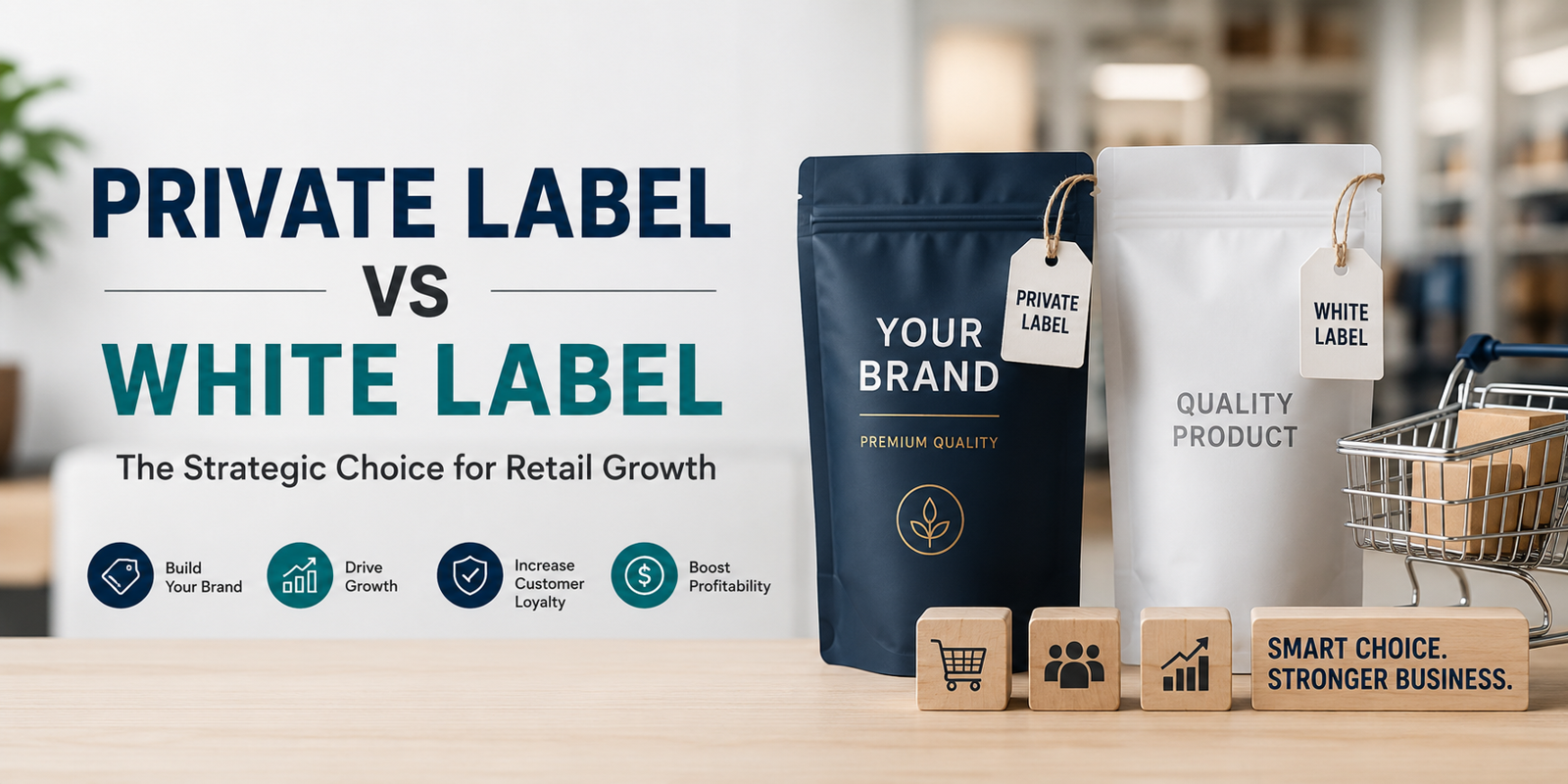
Private Label vs White Label: The Strategic Choice for Retail Growth
Kort sammanfattat
White labeling offers speed and low risk by selling generic products with your branding, ideal for testing markets quickly. Private labeling provides exclusivity through custom formulations, building brand loyalty and higher margins. Choose white label for rapid entry; choose private label for long-term differentiation and defensible market position.
TL;DR
- White labeling prioritizes speed and efficiency for quick market entry, while private labeling focuses on customization and exclusivity to build long-term brand equity.
Private Label vs White Label: The Strategic Decision That Shapes Retail Growth
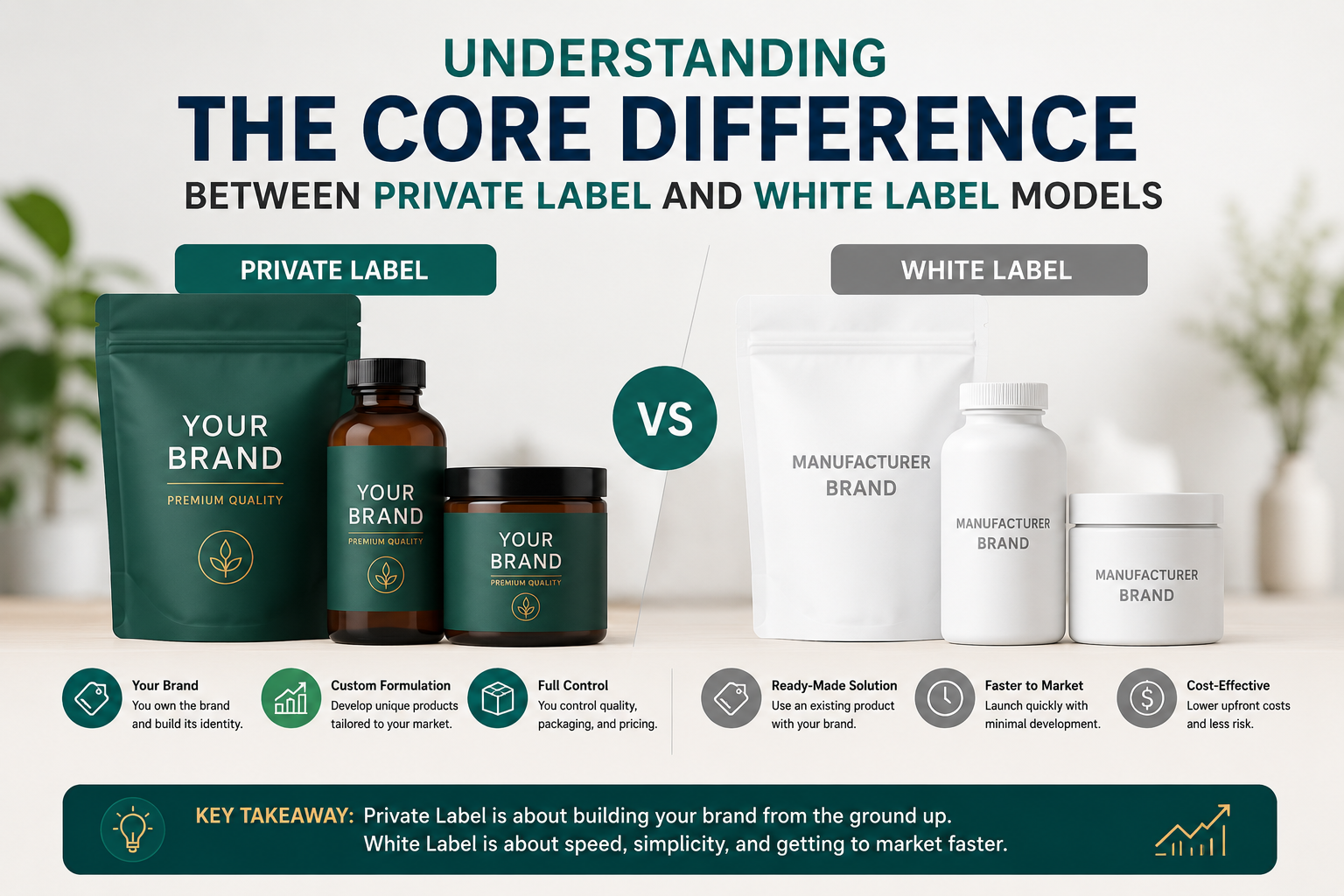
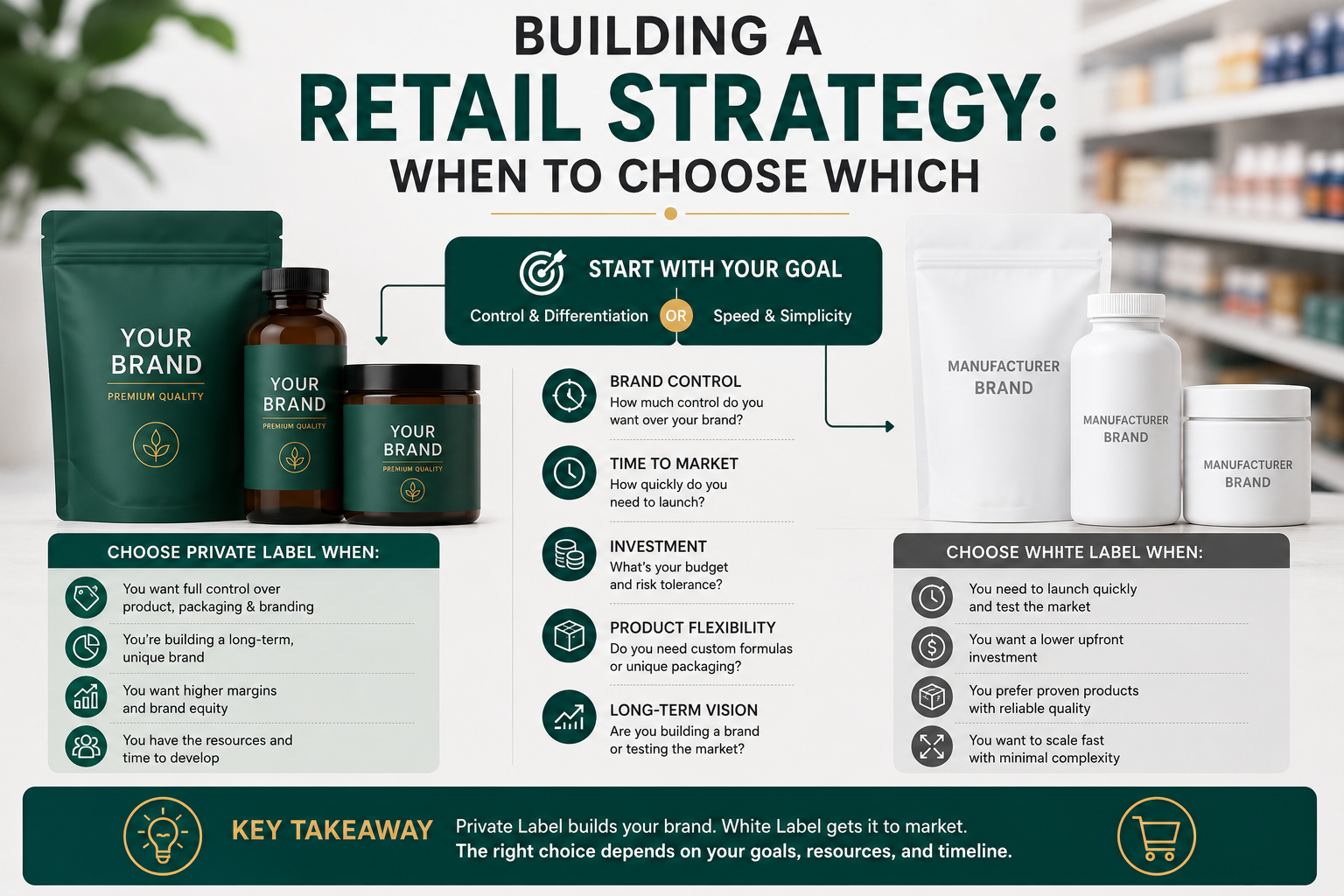
The choice between private‑label and white‑label products is not a matter of cost alone—it determines how a retailer positions itself, controls margins, and protects its brand equity over the long term. In practice, the decision boils down to three intertwined questions:
- How much differentiation do you need to stand out in a crowded market?
- What is your tolerance for development time versus speed‑to‑market?
- Can you sustain higher margins by owning every element of the product, or must you compete primarily on price?
Answering these questions requires a clear understanding of what each model offers and how they align with your business goals.
1. Customization: The Core Distinction
- Private Label: You specify the formulation, packaging design, branding elements, and even supply chain partners. The result is a product that exists only under your brand name. This exclusivity fuels higher perceived value and allows you to set premium pricing.
- White Label: A manufacturer offers a ready‑made formula or product line that can be rebranded by multiple retailers. Customization options are limited—often confined to logo placement, color schemes, or minor ingredient tweaks. The shared nature of the product means you compete mainly on price and distribution reach.
2. Development Time vs Market Velocity
Private‑label projects typically involve longer development cycles: research & development, regulatory approvals (if applicable), packaging design iterations, and quality assurance testing. This can take 6–12 months or more.
White‑label solutions are almost instant to launch. Once you choose a product line, the manufacturer handles production, compliance, and logistics, allowing retailers to hit shelves within weeks.
3. Margin Implications
Because private‑label products carry unique branding and often higher quality standards, they command stronger margins—sometimes 30–50% above comparable white‑label items. However, the upfront investment in R&D, tooling, and marketing is also greater.
White‑label goods typically trade off margin for speed. Retailers can offer competitive pricing but must rely on volume to achieve profitability.
4. Brand Equity and Customer Loyalty
A private‑label product becomes part of your brand narrative. Customers associate the taste, texture, and packaging directly with you, fostering loyalty that transcends price wars.
White‑label items risk dilution: if a competitor sells the same product under a different name, customers may switch based on price or convenience rather than brand attachment.
5. Risk Assessment
- Private Label: Higher upfront cost and longer time to revenue; greater control but also higher exposure if the product fails.
- White Label: Lower entry barrier, but you share risk with competitors who can replicate your offering instantly.
6. When Each Model Makes Sense
- Private Label is ideal when:
- You have a niche market that values exclusivity (e.g., premium protein snacks like SwedeVital Protein Bites).
- Your brand strategy hinges on differentiation and storytelling.
- White Label is suitable when:
- You need to fill a gap quickly (e.g., seasonal snack demand).
7. Practical Decision Framework
Step 1: Define your brand promise. If it centers on unique flavor profiles or health claims, lean toward private label.
Step 2: Map the product lifecycle. Estimate development time versus market urgency. A fast‑moving category may favor white label.
Step 3: Calculate break‑even points. Compare projected margins and required volumes for both models.
Step 4: Assess risk tolerance. Are you prepared to absorb a product flop, or do you need the safety net of shared inventory?
8. Real-World Application: Protein Snacks
Consider a retailer wanting to launch a high‑protein snack line. A private‑label approach would allow them to craft a unique blend—perhaps combining dates, hazelnuts, and coconut for a distinct flavor profile that aligns with their brand’s wellness ethos. The exclusivity justifies premium pricing and builds customer loyalty.
Alternatively, a white‑label route could involve selecting an existing protein‑rich snack from a manufacturer, rebranding it, and distributing it across multiple channels quickly. While margins would be slimmer, the retailer could capture market share rapidly during peak demand periods.
9. Conclusion: Aligning Choice with Strategy
The private‑label versus white‑label decision is fundamentally about control versus speed. Retailers who prioritize brand differentiation and higher margins should invest in private labeling, accepting longer development cycles. Those focused on rapid market entry and volume sales may find white labeling more appropriate.
Further Reading
Vanliga frågor
What is the main difference between private label and white label?
White labeling involves selling generic, pre-made products with your branding, offering speed to market but no product differentiation. Private labeling allows you to customize the product's formula, ingredients, or design, creating an exclusive item that builds brand loyalty.
Which is better for a new retailer: white label or private label?
New retailers often start with white label products to test market dynamics and generate cash flow with lower risk. However, established brands aiming for long-term equity should move toward private labeling to create unique value propositions.
Can I customize the product formula in a white label model?
No, in a white label model, you cannot change the product formulation or ingredients. You can only customize the packaging and branding. Private labeling is required if you need to modify the product itself.
Why is private label gaining ground in 2026?
Private label is growing because consumers seek quality and lifestyle alignment over just low prices. Retailers use private labeling to offer premium, regionally relevant products that differentiate them from generic competitors.