Protein Snacks for Health Food Distributors: What Buyers Need to Know
Kort sammanfattat
A reliable protein snacks distributor in Europe pairs consistent supply with compliant labelling and sell-through formats. Buyers should qualify partners on food safety, documentation, MOQs, lead times, private-label flexibility and margin before ordering, curating SKUs by occasion rather than stocking every lookalike bar.
TL;DR
- Qualify a protein snacks distributor in Europe on food safety, labelling, MOQs and margin before price, and plan snacks as a complement to protein powder.
A dependable protein snacks distributor Europe buyers can build a range around is one that pairs consistent supply with clean, compliant labelling and formats that actually sell through. For retail category managers, wholesalers and private-label partners, the hard part is rarely finding protein snacks — it is qualifying a supplier on food safety, minimum order quantities, lead times, formulation transparency and margin before the first purchase order is raised.
This guide is written for the buyer, not the shopper. It covers how to scope the category, what to interrogate in a supplier, how European labelling shapes your front of pack, and where protein snacks sit alongside the far larger protein powder segment — a due-diligence framework you can take into a first supplier call.
Why protein snacks have become a core range, not an add-on
High-protein snacking has moved from a niche sports-nutrition play into everyday grocery, convenience and health-food retail. The drivers are structural rather than faddish: shoppers are looking for convenient, portion-controlled formats, plant-forward options, and “better-for-you” alternatives to traditional confectionery and crisps. Research generally suggests protein can support satiety, which helps explain the pull — though buyers should keep any on-pack messaging measured and evidence-led rather than promising outcomes.
For a distributor or retailer, that means a category with repeat-purchase potential and healthy basket economics. The risk is fragmentation: dozens of similar bars and bites chase the same shelf. The buyer’s job is to curate a tight, differentiated set of SKUs — a lentil chip for the savoury occasion, a bite or bar for on-the-go, a natural bite for the clean-label shopper — rather than stocking everything and diluting sell-through.
Protein snacks distributor Europe: a sourcing checklist for buyers
Before you talk price, qualify the partner. A structured checklist keeps first conversations disciplined and comparable across suppliers:
- Food-safety credentials. Ask which recognised standard the manufacturing site holds (for example a GFSI-benchmarked scheme) and request current certificates. Verify scope covers the specific products you intend to buy.
- Manufacturing model. Is the supplier an actual manufacturer, a brand owner, or a broker reselling third-party stock? This determines control over quality, lead times and private-label flexibility.
- Specifications and documentation. Request full product specs, allergen statements, nutritional analysis and shelf-life data. These should exist as standard documents, not be assembled on request.
- Minimum order quantities and lead times. Confirm MOQs per SKU, production lead times, and how they change for private-label versus stocked lines.
- Supply resilience. Ask about ingredient sourcing, single points of failure, and how the supplier handled a recent disruption. Continuity of supply protects your shelf.
- Labelling and compliance ownership. Clarify who is responsible for artwork accuracy, claims substantiation and country-specific requirements.
- Commercial terms. Pricing structure, payment terms, incoterms, and whether prices are indexed to volatile inputs.
Score each supplier against the list rather than reacting to whoever quotes the lowest price. The cheapest pallet is a poor bargain if it arrives late, fails a spec check, or carries a claim you cannot defend.
How a specialist protein snacks distributor in Europe differs from a broker
The single most useful distinction to draw is between a partner with genuine control over the product and one that simply moves boxes. A specialist supplier — particularly a manufacturer — can adjust formulation, honour a private-label brief, guarantee traceability back to ingredients, and stand behind claims. A broker may offer attractive spot pricing but limited recourse if a batch is inconsistent or documentation is thin.
Neither model is wrong; they serve different needs. For a durable own-brand range you intend to grow, the control and accountability of a manufacturing partner usually outweighs a few points of margin. To opportunistically fill a gap, a broker can work — provided you apply the same food-safety diligence you would anywhere.
The test: ask a prospective supplier to change one thing about a product — a flavour, a pack size, an ingredient. How they answer tells you whether you are talking to a maker or a middleman.
Reading the label like a buyer, not a consumer
In Europe, labelling is where commercial ambition meets regulation — and where inexperienced buyers get caught. A few disciplines protect you:
- Protein source and quality. Understand whether protein comes from legumes, dairy, soy or blends, and how that affects taste, texture and the shopper you are targeting. Plant-based sources such as lentil or pea broaden appeal to flexitarian and vegan segments.
- Claims discipline. Terms like “high in protein” or “source of protein” are regulated nutrition claims in the EU with defined thresholds. Do not let marketing copy outrun what the product qualifies for.
- Health messaging. Keep functional or health-related language conservative and substantiated. “May support” is defensible; guaranteed outcomes are not.
- Allergens and additives. Confirm allergen declarations and clean-label positioning match the actual formulation, especially for lines marketed as “natural”.
Ask the supplier to show you a compliant sample label for each SKU and to confirm who owns responsibility for claims substantiation. A partner that treats compliance as your problem alone is a partner that will eventually cost you a recall or a delisting.
Formats that earn shelf space
Not every protein format performs the same job, and a smart range mixes occasions rather than duplicating them:
Savoury and salty
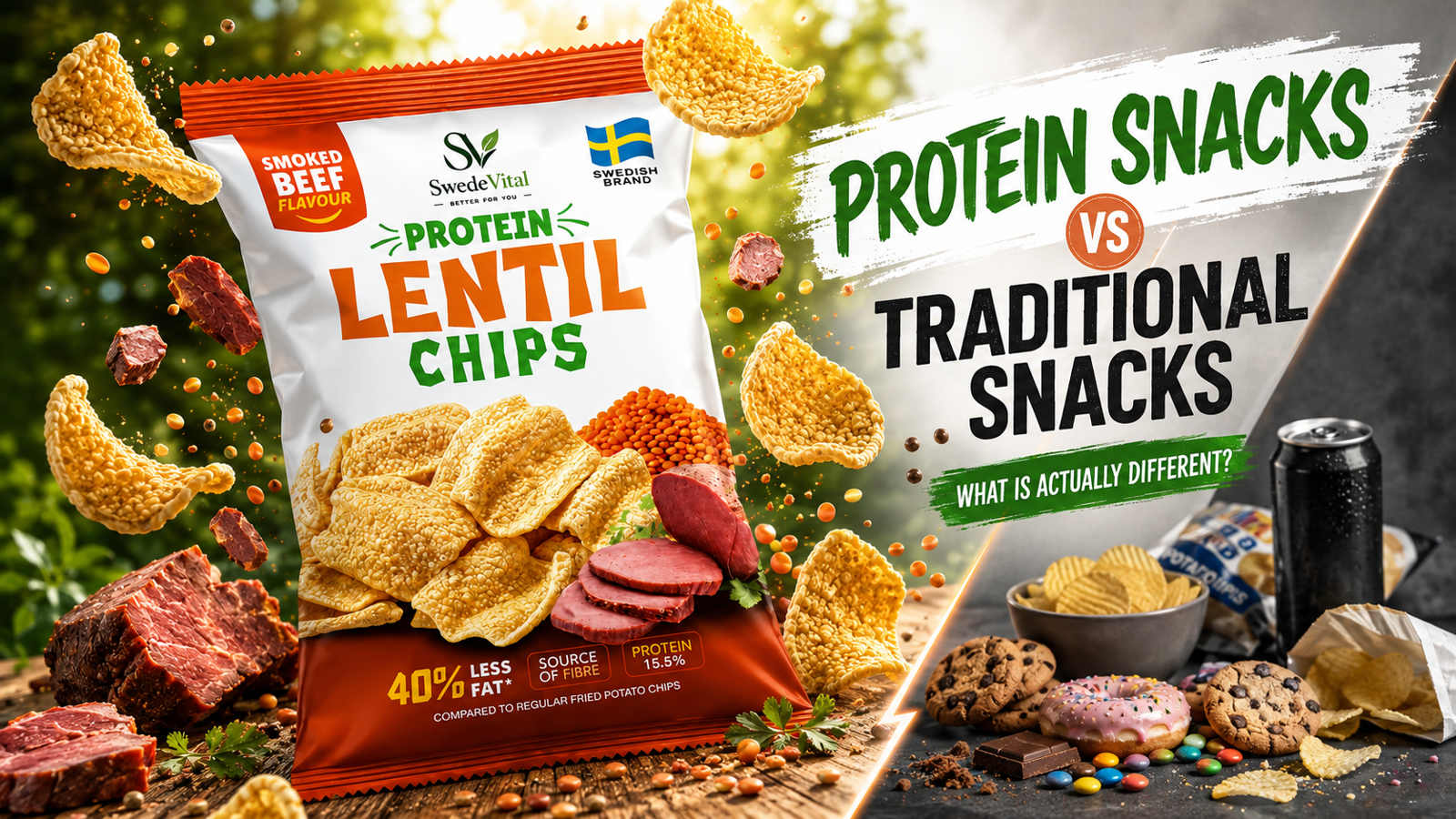
Protein lentil chips and similar savoury formats compete with crisps and answer the “I want something crunchy but better” occasion. They tend to broaden the category beyond the gym-goer.
On-the-go bites and bars
Protein bites, natural bites and protein bars own the portable, single-serve occasion — commuting, post-workout, or an afternoon lift. They are impulse-friendly and merchandise well at till points and end caps.
Adjacent wellness formats
Buyers building a broader health set often pair snacks with functional lines — for example mushroom-based products (Lion’s Mane, Reishi, Cordyceps, Turkey Tail) as capsules, sprays or gummies, plus creatine or magnesium sleep gummies. These sit under different regulation, but they let a health-focused retailer present a coherent “everyday wellness” story rather than isolated SKUs.
Protein snacks distributor Europe vs protein powder: stocking both
It is worth being explicit about how snacks relate to protein powder, because the two are often bought by the same shopper and, increasingly, stocked by the same retailer. Protein powder is the larger, more established segment with very high search demand — it is a considered, transactional purchase where the shopper often arrives knowing the brand or format they want. Protein snacks, by contrast, skew toward convenience and impulse: smaller basket value per unit, but higher frequency and stronger cross-sell.
For a buyer, the practical implication is that snacks and powders complement rather than cannibalise. Powder anchors the “planned” protein mission; snacks capture the “right now” occasion and lift units per transaction. A distributor that can supply a coherent protein snacking range lets you round out an assortment that a powder-only competitor cannot match at the point of impulse. You do not need to source both from one partner — but you should plan the range as one connected shopper journey.
Private label versus branded: choosing your route
Two routes into the category carry very different economics:
- Stocking an established brand. Faster to shelf, marketing support may exist, and shopper recognition can drive rate of sale. The trade-off is thinner margin and less control over exclusivity.
- Private label / own brand. Higher margin potential, differentiation, and control over recipe and positioning. The trade-off is a heavier lift: MOQs, artwork, compliance ownership and the marketing to build recognition from zero.
Many buyers run a hybrid — a recognised brand to signal category credibility plus an own-label line to protect margin. If private label is on your roadmap, confirm early whether a supplier genuinely supports it: development capability, realistic MOQs, and willingness to co-own the specification and claims.
Logistics, MOQs and margin: the commercial reality
The prettiest range fails if the commercials do not work. Model the full landed cost, not just the unit price:
- MOQs and cash. Higher MOQs improve unit cost but tie up working capital and risk obsolescence on slow SKUs. Match order size to realistic velocity.
- Shelf life and rotation. Confirm remaining shelf life on delivery and build rotation into buying so you are not left with short-dated stock.
- Freight and incoterms. Clarify who bears transport, duties and risk. Cross-border movement within Europe still carries cost and complexity that erodes a headline price.
- Margin architecture. Decide target margins by format and let that discipline your negotiation, rather than accepting whatever the quote implies.
A good supplier will talk openly about these levers. Reluctance to discuss lead times, MOQ flexibility or landed cost is itself a data point.
Bringing it together
Choosing a protein snacks partner in Europe is a due-diligence exercise before it is a buying decision. Qualify food safety and documentation first, know whether you are dealing with a maker or a middleman, keep labelling and claims tight, and curate formats by occasion rather than hoarding lookalike SKUs. Plan snacks alongside — not against — protein powder, and choose deliberately between branded, private label or a hybrid. Get those foundations right and the category rewards you with repeat purchase and a range competitors struggle to copy.
Frequently asked questions
What should I check first when choosing a protein snacks distributor in Europe?
Start with food-safety credentials and documentation: the site’s recognised standard, current certificates, and full product specifications including allergens and nutritional analysis. If a supplier cannot produce these as standard, treat it as a warning sign before you ever discuss price.
Are protein snacks and protein powder competing categories?
Generally no — they complement each other. Protein powder serves a planned, considered mission, while protein snacks capture convenience and impulse occasions. Stocking both lets a retailer meet the same shopper at different moments and lift units per transaction.
Does a lower price from a broker beat a manufacturer?
Not usually, if you are building a durable range. A manufacturer offers control over formulation, traceability and private-label flexibility, and stands behind claims. A broker may quote keener spot prices but often provides less recourse on consistency and documentation.
What protein claims can I put on pack in Europe?
Protein-related nutrition claims such as “source of protein” or “high in protein” are regulated with defined thresholds, and health messaging must be substantiated and measured. Confirm with your supplier which claims each product qualifies for, and agree who owns claims substantiation.
How do I decide between branded and private label?
Weigh speed and recognition against margin and control. Established brands reach shelf faster with built-in demand but thinner margin; private label offers higher margin and differentiation but requires MOQ commitment, artwork and compliance ownership. Many buyers run a hybrid of both.
What formats should a first protein snacks range include?
Cover distinct occasions rather than duplicating one. A savoury option such as protein lentil chips, a portable bite or bar for on-the-go, and a clean-label natural bite gives a balanced starting range you can expand as sell-through data comes in.
Vanliga frågor
What should I check first when choosing a protein snacks distributor in Europe?
Start with food-safety credentials and documentation: the site's recognised standard, current certificates, and full product specifications including allergens and nutritional analysis. If a supplier cannot produce these as standard, treat it as a warning sign before you ever discuss price.
Are protein snacks and protein powder competing categories?
Generally no - they complement each other. Protein powder serves a planned, considered mission, while protein snacks capture convenience and impulse occasions. Stocking both lets a retailer meet the same shopper at different moments and lift units per transaction.
Does a lower price from a broker beat a manufacturer?
Not usually, if you are building a durable range. A manufacturer offers control over formulation, traceability and private-label flexibility, and stands behind claims. A broker may quote keener spot prices but often provides less recourse on consistency and documentation.
What protein claims can I put on pack in Europe?
Protein-related nutrition claims such as 'source of protein' or 'high in protein' are regulated with defined thresholds, and health messaging must be substantiated and measured. Confirm with your supplier which claims each product qualifies for, and agree who owns claims substantiation.
How do I decide between branded and private label?
Weigh speed and recognition against margin and control. Established brands reach shelf faster with built-in demand but thinner margin; private label offers higher margin and differentiation but requires MOQ commitment, artwork and compliance ownership. Many buyers run a hybrid of both.
What formats should a first protein snacks range include?
Cover distinct occasions rather than duplicating one. A savoury option such as protein lentil chips, a portable bite or bar for on-the-go, and a clean-label natural bite gives a balanced starting range you can expand as sell-through data comes in.