How Health Food Wholesalers Can Add Protein Snacks to Their Portfolio
Kort sammanfattat
Adding protein snacks is a low-risk range extension for health-food wholesalers. Choose a protein snacks wholesaler offering verifiable nutrition data, honest labelling, flexible order quantities and branded plus private-label routes, then merchandise the range beside the protein and wellness products your customers already buy.
TL;DR
- Vet suppliers on specs, compliance and flexibility, decide branded versus private label, model true landed margin, and merchandise protein snacks beside existing protein demand.
Adding protein snacks to a health-food portfolio is one of the lowest-risk range extensions a wholesaler can make — the category rides a durable consumer shift toward higher-protein, better-for-you eating, and it slots neatly beside products you already stock. To do it well, choose a protein snacks wholesaler or manufacturer that offers verifiable nutrition data, honest labelling, flexible order quantities and both branded and private-label routes, then merchandise the range next to the protein and wellness products your customers already buy.
Why protein snacks belong in a modern health-food range
Protein has moved from a niche concern for athletes to a mainstream purchase driver. Shoppers scan front-of-pack for grams of protein the way they once scanned for "low fat", and that behaviour now extends far beyond powders into everyday snacking. For a health-food buyer, this matters for a simple reason: protein snacks convert an occasional, considered purchase into a repeat, impulse-friendly one. A customer buys a tub of protein powder every few weeks; they can buy a bag of protein chips or a protein bar every visit.
The strategic logic is adjacency. If your customers already trust you for supplements, sports nutrition and natural groceries, a well-chosen protein snack line deepens the basket without asking them to change where they shop. It also broadens appeal: snacks reach shoppers who would never scoop powder into a shaker but happily pick up a savoury, high-protein alternative to crisps.
There is a defensive angle too. Snacking is one of the most contested spaces in grocery, and mainstream retailers are steadily adding "better-for-you" lines. A health-food wholesaler that curates a credible, well-documented protein snack range — rather than a random handful of SKUs — protects its position as the trusted specialist rather than ceding the occasion to generalist channels. The goal is not simply to have protein snacks on a price list, but to be the partner retailers turn to for a coherent, defensible selection.
The main protein snack formats and how they differ
Before you approach a supplier, understand the formats, because each behaves differently on shelf, in logistics and on margin.
Protein chips and savoury snacks
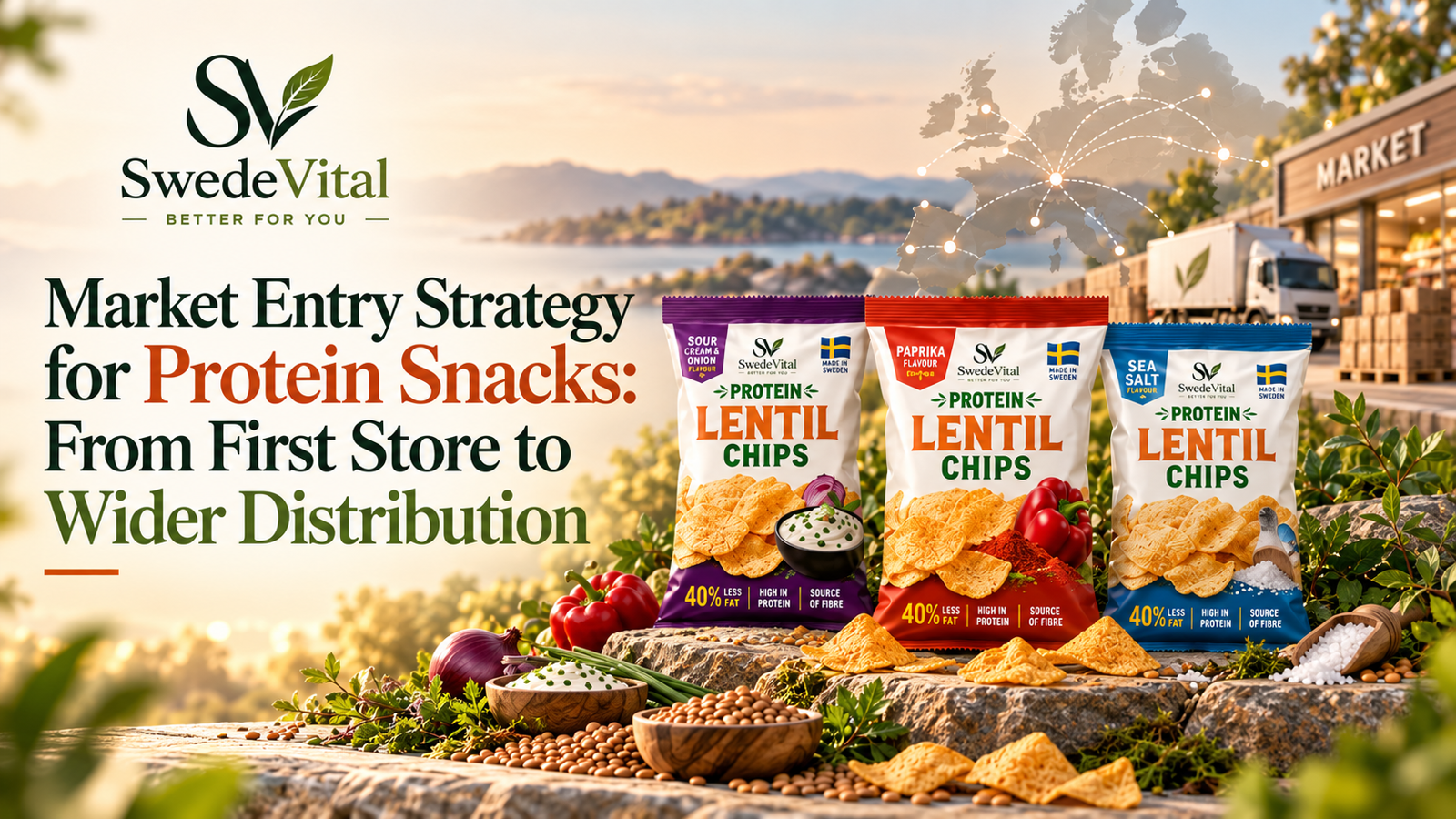
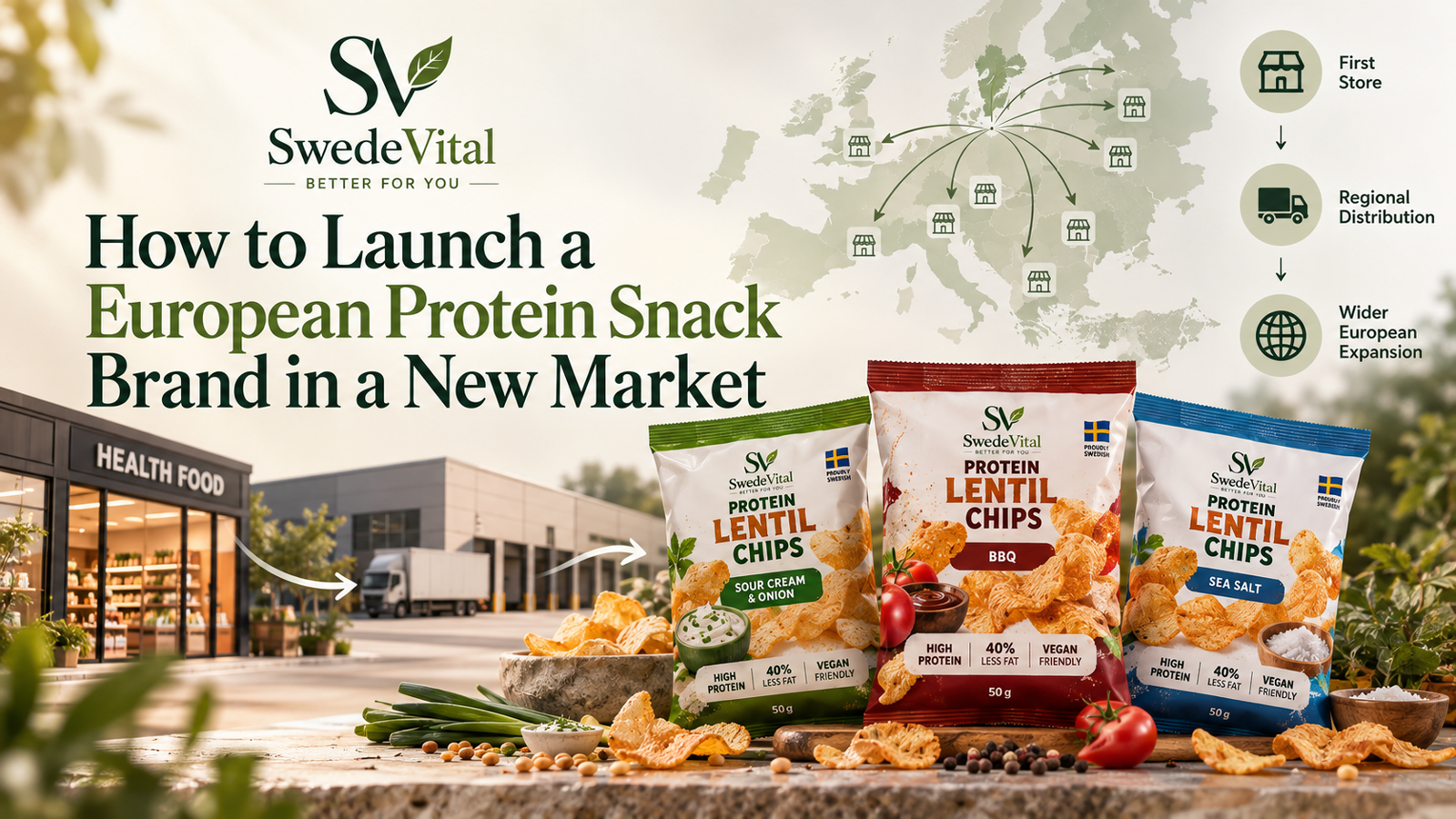
Baked or popped savoury snacks — for example protein lentil chips — compete for the crisps and "better-for-you" salty-snack occasion. They tend to have strong impulse appeal, travel well and suit checkout and meal-deal placement. Watch texture and seasoning consistency between batches; savoury snacks live or die on eating experience.
Protein and natural bites
Bite-sized formats — protein bites and natural bites — bridge snacking and functional nutrition. They work as a grab-and-go option and as a cleaner-label alternative to confectionery. Shelf life and packaging integrity are the key diligence points here.
Protein bars
Bars are the most established sub-category, which cuts both ways: proven demand, but a crowded set where differentiation (ingredient quality, protein source, sugar level, clean label) decides whether a new listing earns its space.
What to look for in a protein snacks wholesaler or manufacturer
Not every supplier is built to support a retail or distribution partner. When you evaluate a protein snacks wholesaler, treat it as a due-diligence exercise rather than a price comparison. The cheapest case price is worthless if the product delivers late, drifts in quality, or carries a claim you cannot defend to a regulator.
Use this checklist when you shortlist suppliers:
- Documented nutrition and specifications: a full spec sheet per SKU — ingredients, allergens, protein content, nutrition panel, shelf life and storage — not a marketing one-pager.
- Food-safety credentials: ask which recognised food-safety standards the production site operates to, and request the relevant certificates and audit status in writing.
- Labelling that meets your market: for European retail, packaging must satisfy local food-information and nutrition-labelling rules, including any nutrition or health claims. Confirm who is responsible for compliance in your territory.
- Batch consistency and traceability: lot coding, quality control between production runs, and a clear recall procedure.
- Order flexibility: minimum order quantities and lead times that match your stock turns, plus a sensible path to scale as sell-through proves out.
- Range coherence: a supplier with a connected range — snacks alongside a functional-wellness line, for instance — lets you build a themed section from one relationship.
A good supplier answers "show me the spec, the certificate and the shelf life" without hesitation. If those documents are slow to appear, treat it as a signal about how the relationship will run.
Branded, private label, or both?
One of the biggest decisions is whether to stock a supplier's own brand, commission a private-label version under your banner, or run both. Each route has a different risk and reward profile.
- Branded stock is faster to list, carries any existing recognition, and shifts marketing effort to the brand owner — but margins are thinner and you compete on price with anyone else who carries the same line.
- Private label gives you margin, control of positioning and a product customers can only get from you. It demands more upfront commitment — typically higher volumes, artwork, and ownership of the claims and compliance on pack.
- A hybrid — test with branded stock, then convert proven winners to private label — lets sell-through data, not guesswork, decide where you invest.
Manufacturers that support private-label partners across both a snack range and a functional line are particularly useful for distributors who want to build an own-brand that spans more than one category.
Nutrition claims and compliance: get this right first
Protein is a regulated selling point. In the EU, describing a product as a "source of protein" or "high in protein" is only permitted when defined thresholds are met, and any health claim must come from the authorised list. As the party placing product in front of shoppers, you share responsibility for what the pack says.
Practical guardrails for buyers:
- Insist that every protein or nutrition claim on pack is backed by the product's own analysis, not a category generalisation.
- Keep functional-wellness messaging evidence-led and measured. For ingredients such as Lion's Mane, Reishi, Cordyceps or Turkey Tail mushrooms, research is still developing; language should say a product may support a benefit where evidence suggests it, never promise a guaranteed outcome.
- Confirm allergen declarations and cross-contamination statements — protein snacks frequently involve nuts, soy, dairy or gluten-adjacent ingredients.
- Agree in writing who owns labelling compliance for your specific market before the first pallet ships.
The commercial model: what a protein snacks wholesaler should offer
Protein snacks can be a healthy-margin category, but only if you plan the unit economics rather than assume them. The right supplier gives you the levers to do that — transparent pricing, dependable lead times and the flexibility to right-size orders. Rather than chase a single headline case price, model the full picture.
- Landed cost, not list cost: add freight, duties, storage and any repacking to the case price before you judge margin.
- Stock turn: a slightly lower margin on a fast-moving savoury snack can beat a high margin on a bar that ages on the shelf. Track rate of sale per SKU.
- Shelf life headroom: confirm remaining shelf life on delivery and set a minimum you will accept, so you are not passing short-dated stock to your own customers.
- MOQ versus cash flow: match minimum orders to realistic sell-through. Over-ordering to hit a price break ties up cash and risks waste.
- Scalability: confirm the supplier can grow with you, so a successful launch is not capped by their capacity.
Build the range in a controlled way: start with a tight selection of formats, measure, then widen. A focused launch of a few proven SKUs almost always outperforms a sprawling first order, because it concentrates your marketing, keeps stock fresh, and produces cleaner sell-through data to guide the next buy. It also protects the relationship with your own retail customers: a small, reliable range that stays in stock earns more trust than a broad one that runs dry or turns short-dated.
Merchandising: put protein snacks where protein buyers already are
The single biggest search demand around protein remains protein powder — evidence that the protein-seeking shopper is already in your store, basket in hand. Use that. Placing protein snacks within sight of powders, shakers and sports nutrition captures the same intent at a lower price point and a higher purchase frequency.
Consider a few placement plays:
- Adjacency to powders: a "protein snacking" bay beside the powder fixture converts considered shoppers into repeat snack buyers.
- Checkout and grab-and-go: single-serve chips, bites and bars suit impulse zones and meal-deal bundles.
- Themed wellness section: pairing protein snacks with a functional-wellness line — mushroom capsules, sprays or gummies, creatine and magnesium sleep gummies — creates a destination shelf that signals expertise and lifts the whole category.
SwedeVital's range spans exactly this pairing — plant-based protein snacks alongside a functional-wellness line — which lets a wholesaler assemble a coherent, cross-merchandised section from a single supplier relationship rather than stitching together several.
A practical rollout checklist
- Define the shopper and occasion you are adding the range for (impulse snack, sports nutrition adjacency, cleaner-label confectionery alternative).
- Shortlist two or three suppliers and request full specs, certificates and shelf-life data.
- Decide branded, private label, or a test-then-convert hybrid.
- Confirm labelling and claims compliance for your market, in writing.
- Model landed cost, MOQ and expected stock turn per SKU.
- Launch a focused selection, merchandise it beside existing protein demand, and review rate of sale before expanding.
Approached this way, protein snacks are less a gamble than a measured extension of a range you already understand — one that meets real, growing demand and rewards the buyers who stock it with credibility as much as margin.
Vanliga frågor
What is a protein snacks wholesaler?
A protein snacks wholesaler is a supplier or manufacturer that sells protein-rich snack products in trade quantities to retailers, distributors and private-label partners, typically providing product specifications, food-safety documentation and flexible order volumes rather than selling direct to consumers.
Should retailers stock protein snacks next to protein powder?
Yes. Protein powder attracts the highest protein-related search demand, so those shoppers are already in-store. Placing protein snacks beside powders and sports nutrition captures the same intent at a lower price point and a higher purchase frequency, lifting basket size.
What is the difference between branded and private-label protein snacks?
Branded stock is faster to list and shifts marketing to the brand owner but offers thinner, more competitive margins. Private label gives you better margin, exclusive positioning and control, but requires more upfront commitment plus ownership of the on-pack claims and compliance.
What should buyers check before listing a new protein snack?
Request a full specification and nutrition panel per SKU, food-safety certificates, allergen and cross-contamination statements, remaining shelf life on delivery, batch traceability, and written confirmation of who owns labelling and claims compliance for your market.
Are protein snacks profitable for health-food retailers?
They can be, if you model unit economics properly. Judge margin on landed cost rather than list price, track rate of sale per SKU, match minimum order quantities to realistic sell-through, and prioritise fast-turning formats over slow, high-margin lines.
How should functional-wellness ingredient claims be handled on pack?
Keep them evidence-led and measured. For ingredients such as Lion's Mane, Reishi or Cordyceps, research is still developing, so language should say a product may support a benefit where evidence suggests it, and never promise a guaranteed outcome. Any protein or health claim must meet the applicable regulations.